

 ← Back to Blog
 The 40% of cancers you can prevent, and what Protocol tests to prove it
The 40% of cancers you can prevent, and what Protocol tests to prove it
Approximately 40% of all cancers diagnosed in the United States are attributable to modifiable risk factors. Not genetics. Not bad luck. Factors you can measure, track, and change.
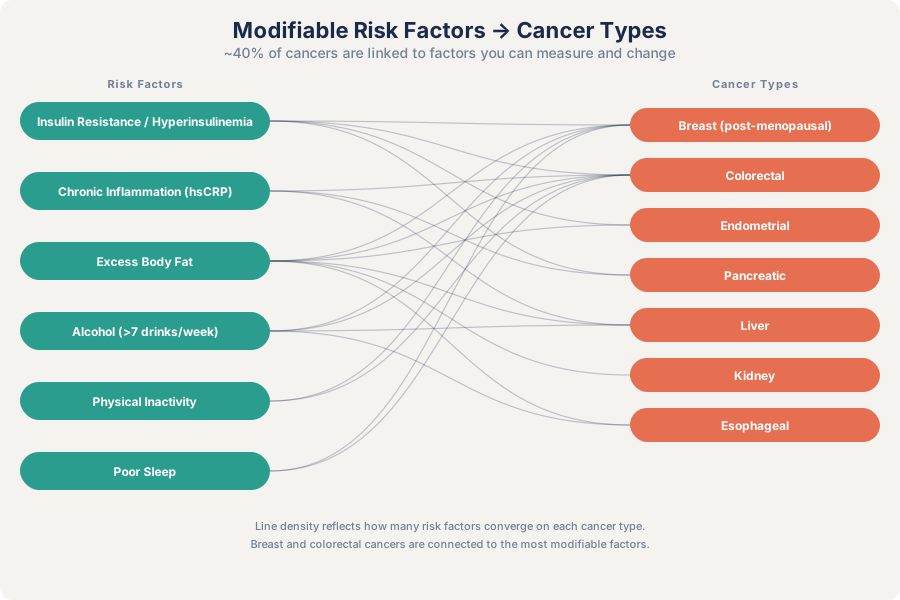
That number comes from population-level epidemiologic data, and it covers some of the most common cancers: breast, colorectal, endometrial, pancreatic, liver, kidney, and esophageal. The risk factors aren’t mysterious. They’re the same metabolic, inflammatory, and behavioral markers that Protocol already measures. Most people just don’t connect those biomarkers to cancer prevention.
This post maps specific Protocol measurements to specific cancer risks. Not vague advice to “live healthier.” Specific biomarkers, specific cancers, specific targets.
Fasting insulin: the growth signal you’re probably not tracking
(Measured in Protocol 3, Metabolic Health)
Insulin is an anabolic hormone. Its job is to drive growth: glucose into cells, amino acids into muscle, lipids into storage. In cancer biology, that growth signal is the problem.
Hyperinsulinemia (chronically elevated fasting insulin) promotes cancer through several mechanisms. Insulin and IGF-1 activate the PI3K/Akt/mTOR pathway, one of the most studied signaling cascades in oncology, which drives cell proliferation. Elevated insulin also reduces sex hormone-binding globulin (SHBG), which raises free estrogen, a growth factor for hormone-receptor-positive breast cancer and endometrial cancer. And insulin resistance drives systemic inflammation, creating a microenvironment that favors tumor initiation.
The cancers most strongly associated with hyperinsulinemia: breast (particularly post-menopausal), colorectal, pancreatic, and endometrial. Large observational studies consistently show the association, though no randomized trial has tested whether lowering insulin directly reduces cancer incidence.
Protocol target: Fasting insulin below 10 uIU/mL, HOMA-IR below 2.5. If you’re above these thresholds, your Protocol 3 assessment will flag it and your care team will build a plan: dietary changes, exercise prescription, medication if indicated.
Most standard physicals don’t measure fasting insulin. They measure fasting glucose and HbA1c, which only become abnormal after insulin resistance has been present for years. By the time glucose is elevated, the horse has left the barn. Fasting insulin catches the problem upstream.
hsCRP: chronic inflammation and cancer risk
(Measured in Protocol 1, Cardiovascular Risk)
High-sensitivity C-reactive protein is a marker of systemic inflammation. Protocol measures it for cardiovascular risk, but the cancer connection is direct.
Chronic low-grade inflammation promotes cancer in at least three ways: reactive oxygen species generated during inflammatory responses damage tumor suppressor genes and oncogenes; inflammatory cytokines like IL-6 and TNF-alpha promote angiogenesis (the new blood vessel formation that tumors depend on); and, paradoxically, chronic inflammation suppresses the adaptive immune response that would otherwise catch early cancer cells before they establish.
Elevated hsCRP (above 3.0 mg/L) is associated with increased risk of colorectal, lung, breast, and prostate cancer in observational data. The CANTOS trial, designed to test whether reducing inflammation with canakinumab (an IL-1beta inhibitor) prevents heart attacks, found something it wasn’t looking for: a reduction in lung cancer incidence and mortality in the treatment group. That’s the strongest category of evidence that inflammation reduction can affect cancer outcomes, though canakinumab isn’t used for cancer prevention outside of trials.
Protocol target: hsCRP below 1.0 mg/L (optimal), below 3.0 mg/L (acceptable). Persistently elevated hsCRP triggers investigation of the source: visceral adiposity, poor sleep, undiagnosed infection, autoimmune disease, or dietary inflammation.
Body composition: visceral fat and 13 cancer types
(Measured in Protocol 2, DEXA body composition scan)
Obesity, specifically visceral adiposity, is associated with increased risk of at least 13 cancer types: esophageal adenocarcinoma, gastric cardia, colorectal, liver, gallbladder, pancreatic, breast (post-menopausal), endometrial, ovarian, kidney (renal cell), meningioma, thyroid, and multiple myeloma. This designation comes from the IARC, based on extensive systematic review with the highest level of evidence for each listed type.
BMI captures some of this risk, but it’s a blunt instrument. A muscular person with a BMI of 28 and low visceral fat has a different cancer risk profile than a sedentary person with the same BMI and high visceral fat. DEXA separates lean mass from fat mass and gives regional fat distribution data, including visceral adipose tissue (VAT) estimates.
The mechanism is multi-factorial. Adipose tissue is an endocrine organ. It produces estrogen via aromatase, raises insulin, and alters adipokine signaling (increased leptin, decreased adiponectin). Visceral fat is metabolically active and generates the same IL-6 and TNF-alpha that promote cancer initiation. For esophageal and gastric cancers specifically, visceral obesity increases intra-abdominal pressure and gastroesophageal reflux, directly damaging esophageal tissue.
Protocol target: Visceral fat within age- and sex-appropriate reference ranges on DEXA, tracked longitudinally to measure response to interventions.
Alcohol: the group 1 carcinogen in your glass
(Assessed in Protocol 9, Cancer Prevention intake)
Alcohol is classified as a Group 1 carcinogen by IARC, the highest certainty level, the same category as tobacco smoke, asbestos, and ionizing radiation. This isn’t a fringe position within oncology research. It just doesn’t get communicated that way to the public.
The dose-response relationship is linear for several cancers, which means there’s no threshold below which risk disappears:
- Breast cancer: 7-10% increased risk per standard drink per day. One glass of wine daily carries measurably higher risk than none. Two drinks per day: 20% or more.
- Colorectal cancer: Risk increases above about 2 drinks per day, though some data suggests the elevation starts earlier.
- Esophageal, liver, oral cavity, pharyngeal, and laryngeal cancers all have strong dose-response relationships with alcohol intake.
The mechanism runs through acetaldehyde, alcohol’s first metabolite, which damages DNA directly. Alcohol also raises estrogen levels, impairs folate metabolism, and increases mucosal permeability to other carcinogens.
Protocol approach: Alcohol consumption is quantified during the Cancer Prevention protocol intake. Members get their risk data in specific terms, not “drink less” but “your current consumption of X drinks per week is associated with a Y% increase in Z cancer risk.” The decision is the member’s. The data is Protocol’s job.
Physical activity: 10-20% risk reduction across 7+ cancer types
(Assessed in Protocol 4, Physical Capacity)
150-300 minutes per week of moderate-intensity exercise reduces the risk of at least 7 cancer types by roughly 10-20%. The evidence comes from large prospective cohort studies that consistently show the association.
The cancers with the strongest data: breast, colorectal, endometrial, bladder, esophageal, kidney, and gastric. The mechanisms are multiple and they overlap with the other risk factors here. Exercise directly reduces fasting insulin and improves insulin sensitivity; regular moderate activity lowers hsCRP and IL-6; exercise enhances natural killer cell activity and immune surveillance of abnormal cells; it reduces circulating estrogen in post-menopausal women by reducing adipose tissue; and for colorectal cancer specifically, it shortens colonic transit time, limiting contact between potential carcinogens and the intestinal lining.
Protocol target: 150-300 minutes per week of moderate-intensity activity, tracked through Protocol 4. Strength training at least 2 sessions per week. Aerobic and resistance exercise have independent associations with risk reduction, so you need both.
Vitamin d: the observational signal
(Measured in Protocol 6, Nutrient Optimization)
The vitamin D and cancer relationship is one of the most studied and most debated questions in cancer prevention. Observational data consistently links higher serum 25-hydroxyvitamin D with lower colorectal cancer risk. For breast and prostate cancer, the evidence is weaker and less consistent.
The VITAL trial tested this directly: 25,871 participants, 5+ years of follow-up, 2,000 IU/day of vitamin D supplementation. The primary endpoint was negative, showing no overall reduction in cancer incidence. But secondary analyses showed a potential reduction in cancer mortality, particularly in people with lower baseline vitamin D levels.
That’s the honest picture: a strong observational signal for colorectal cancer, a failed primary endpoint in the only large RCT, and a mortality reduction in secondary analysis that may or may not replicate. Protocol targets 40-60 ng/mL because the convergent evidence across bone health, immune function, and cancer data all point in the same direction, not because any single trial settled it.
Protocol target: Serum 25-hydroxyvitamin D of 40-60 ng/mL, with supplementation titrated to that range.
Tobacco: the highest-yield prevention intervention
(Assessed in Protocol 9, Cancer Prevention intake)
Tobacco use is the single largest preventable cause of cancer death worldwide. Lung cancer alone kills more people than breast, prostate, and colorectal cancers combined, and roughly 80-85% of lung cancer cases are attributable to smoking.
Beyond lung cancer, tobacco increases risk for at least 12 other cancer types: bladder, cervical, colorectal, esophageal, kidney, laryngeal, liver, oral cavity, pancreatic, pharyngeal, stomach, and acute myeloid leukemia, among others.
Protocol approach: Current tobacco use is assessed at intake. For current smokers, cessation support is the single highest-return intervention in the cancer prevention plan, higher than any screening test, supplement, or biomarker optimization. Eligible current and former smokers (ages 50-80, 20+ pack-year history, currently smoking or quit within the past 15 years) are enrolled in annual low-dose CT screening per USPSTF 2021 criteria, which has strong evidence for mortality reduction.
The cross-protocol picture
What makes Protocol’s approach different from a standard cancer screening visit: the biomarkers you’re already tracking for cardiovascular health and metabolic optimization are cancer prevention biomarkers. You don’t need separate tests. You need someone connecting the data.
| Biomarker | Primary Protocol | Cancer Relevance |
|---|---|---|
| Fasting insulin / HOMA-IR | Protocol 3 | Breast, colorectal, pancreatic, endometrial |
| hsCRP | Protocol 1 | Colorectal, lung, breast |
| Visceral fat (DEXA) | Protocol 2 | 13+ cancer types |
| Vitamin D | Protocol 6 | Colorectal (strongest), others |
| Physical activity | Protocol 4 | 7+ cancer types |
| Alcohol intake | Protocol 9 | Breast, colorectal, liver, esophageal, oral |
| Tobacco use | Protocol 9 | 12+ cancer types |
Every one of these is measurable, has a target, and gets tracked over time. When you improve metabolic health, bring down inflammation, change body composition, and address behavioral risk factors, you’re moving cancer risk through the same mechanisms that move heart disease risk. The same blood draw. The same scan. Different implications.
The 40% figure gets cited because it’s striking, but the number only means something if you actually measure the factors behind it. That’s what the protocols are for.
Want to see which of your biomarkers carry cancer prevention implications? Book a Discovery Call to learn how Protocol’s cross-protocol approach tracks the modifiable risk factors behind 40% of all cancer diagnoses.