

 ← Back to Blog
 Your A1c is 5.8: now what?

Your A1c is 5.8: now what?
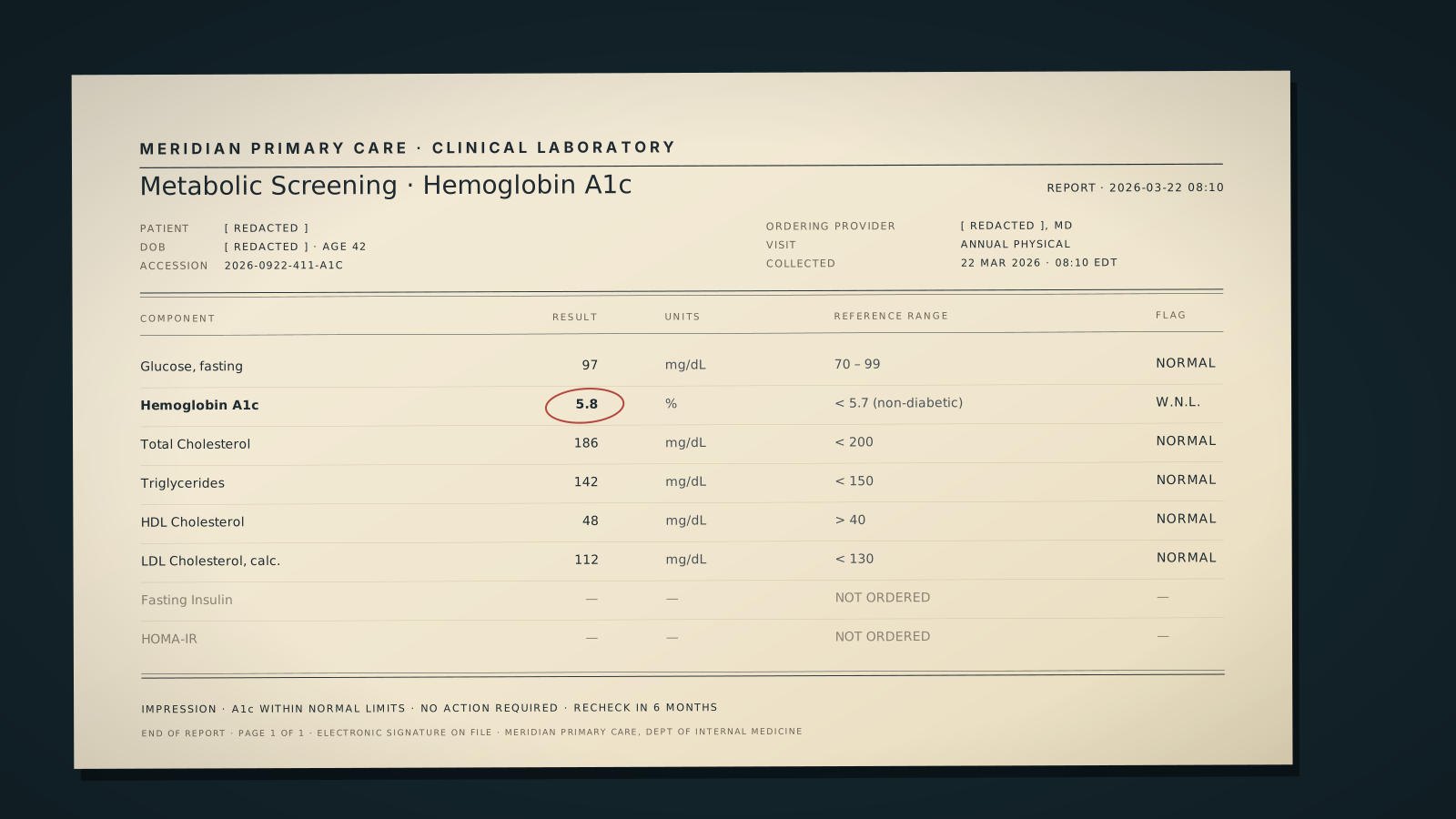
You opened your lab results. A1c: 5.8%. Next to it, a flag: High. Maybe a note from your doctor: “prediabetic range, recheck in 6 months.”
That’s it. No explanation of what the number means. No plan. Just a label and a waiting period.
If that’s where you are right now, take a breath. An A1c of 5.8 is not a diabetes diagnosis. But it is a signal, and ignoring it for six months is the wrong move.
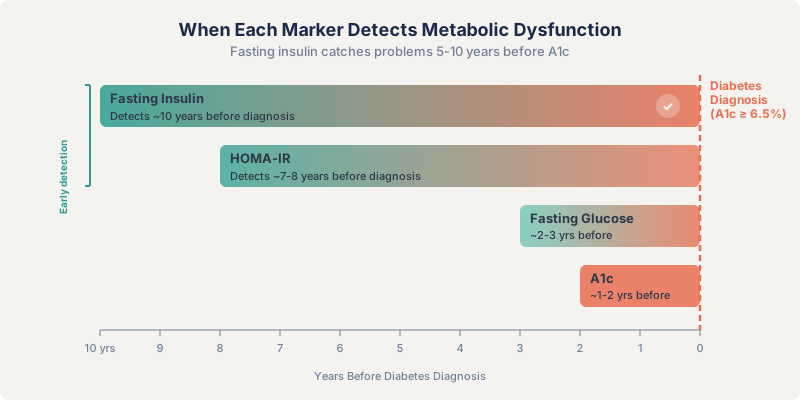
By the time your A1c hits 5.8, your body has likely been struggling with insulin for years. There are earlier, more specific markers that could have caught this sooner, and concrete steps you can take right now, not in six months.
What a1c actually measures (and what it misses)
A1c (glycated hemoglobin) measures your average blood sugar over the past 2-3 months. It’s a useful screening tool, but it’s a lagging indicator. Like checking your rearview mirror to see where you’re headed.
A1c stays “normal” (below 5.7%) for years while insulin levels quietly climb. Your pancreas compensates by producing more and more insulin to keep blood sugar in range. A1c doesn’t catch this. It only flags a problem once the pancreas can no longer keep up and blood sugar starts rising.
By the time A1c reads 5.8, insulin resistance may have been building for 5 to 10 years.
The test your doctor probably didn’t order
Most annual physicals include fasting glucose and A1c. Both measure blood sugar. Neither measures insulin.
It’s like checking your bank balance without looking at your spending. The balance looks fine, but the trajectory is another story.
The missing test is fasting insulin. It costs about $25 at most labs and tells you how hard your pancreas is working to keep blood sugar in range. Pair that with fasting glucose and you get a number called HOMA-IR, which estimates how resistant your cells have become to insulin.
The formula: (fasting insulin × fasting glucose) / 405. (Both values must be drawn from a true fasting state, 8+ hours, at the same blood draw.)
What HOMA-IR tells you:
- Below 1.5: metabolically healthy. Your cells respond well to insulin, your pancreas isn’t working overtime.
- 1.5 to 2.5: insulin is climbing but blood sugar still looks normal. This is the intervention sweet spot, changes made here tend to stick.
- Above 2.5: insulin resistant. Your body is producing far more insulin than it should. A1c may or may not be elevated yet.
Note: HOMA-IR cutoffs are not universally standardized, some labs and studies use >2.0 or >3.0 as the insulin resistance threshold. The ranges above reflect commonly cited values in the metabolic health literature; your clinician may interpret them slightly differently depending on population data.
Most people with an A1c of 5.8 have a HOMA-IR well above 2.5. Some have been above 2.5 for years without anyone checking.
Why “recheck in 6 months” isn’t enough
When your doctor says to recheck in six months, they’re following standard guidelines. But the guidance often stops there. Either the number gets worse and now medication is on the table, or it looks similar with no clarity on why or what changed.
Six months without measuring the right things is six months of continued insulin resistance. The pancreas keeps compensating. The body doesn’t pause while you wait.
The alternative is to measure what matters now, understand where you actually stand, and start making changes based on actual data.
What to do in the next 30 days
Step 1: get the right labs
Ask your doctor to order, or order through a direct-to-consumer lab:
- Fasting insulin (not just fasting glucose)
- HOMA-IR (some labs calculate this; otherwise use the formula above)
- TG:HDL ratio: divide your triglycerides by your HDL cholesterol. A ratio above 2.0 is another early marker of insulin resistance. Below 1.0 is optimal.
- Fasting glucose (you probably already have this)
These four numbers give you a far more complete picture than A1c alone.
Step 2: understand your baseline
Once you have your results, you know where you stand:
| Marker | Optimal | Trending Up | Elevated |
|---|---|---|---|
| HOMA-IR | < 1.5 | 1.5 - 2.5 | > 2.5 |
| Fasting insulin | < 8 mIU/L | 8 - 12 mIU/L | > 12 mIU/L |
| TG:HDL ratio | < 1.0 | 1.0 - 2.0 | > 2.0 |
| A1c | < 5.7% | 5.7 - 5.9% | 6.0%+ |
Notice the pattern: insulin-based markers flag problems earlier than A1c does. If your fasting insulin is 11 and your A1c is 5.8, your insulin was likely trending up for years before your A1c caught up.
Step 3: run a CGM experiment
A CGM (continuous glucose monitor) is a small sensor worn on the back of your arm that measures blood sugar every few minutes for 14 days. They’re FDA-cleared for diabetes management but widely used in preventive settings now. For someone without a diabetes diagnosis, they’re typically self-pay, roughly $75-150 for a 14-day sensor. What they show you that labs can’t: how your blood sugar moves in response to specific meals, sleep, exercise, and stress, in your actual life.
Three experiments worth running:
The Walk Test. Eat the same meal two days in a row. Day one, sit down after. Day two, take a 15-minute walk. Compare the glucose curves. Many people see a 20-30 mg/dL difference in their post-meal spike.
The Protein Anchor. Eat protein and fat before carbohydrates. Compare the glucose curve to eating carbs first. The difference is often significant, a 140 mg/dL spike can drop to around 115 mg/dL.
The Sleep Effect. Track your fasting morning glucose after a good night’s sleep versus a short one. Consistent sleep restriction can raise fasting glucose by 10-15 mg/dL.
None of this is theory. It’s your body, your food, your numbers.
Step 4: set measurable targets
With a CGM and your lab results, you have specific numbers to track:
- Time above 140 mg/dL: below 10% of readings. Most metabolically healthy people spend very little time above 140.
- Mean glucose: below 105 mg/dL.
- Fasting insulin: below 10 mIU/L, ideally below 8.
- HOMA-IR: below 1.5.
These are actual numbers to move, not goals like “eat better” or “exercise more.”
The interventions that actually move these numbers
You don’t need a complete overhaul. A few targeted changes move metabolic markers more than most people expect.
Meal sequencing. Eat protein and vegetables before starches and sugars. This alone can reduce post-meal glucose spikes by 30-40%, no calorie counting involved.
Post-meal movement. A 15-minute walk after your largest meal. Your muscles pull glucose out of the bloodstream during movement, which flattens the spike. Not a workout, a walk.
Sleep. Seven hours minimum. Chronic restriction to 4-5 hours can reduce insulin sensitivity by 25-30%. It’s not a lifestyle tip. It’s a metabolic variable.
Strength training. Muscle is your largest glucose sink. Two to three sessions per week of resistance training improves insulin sensitivity within weeks, independent of weight loss.
None of these require medication or extreme diets. All of them produce measurable changes in fasting insulin, HOMA-IR, and CGM data within 30-60 days.
What happens if you don’t act
An A1c of 5.8 is prediabetes. Without intervention, roughly 15-30% of people with prediabetes develop type 2 diabetes within 5 years. The rest either stay prediabetic or improve. “Stay prediabetic” sounds like a neutral outcome, but it isn’t, prediabetes carries real cardiovascular risk even without progressing to diabetes.
Prediabetes is reversible, and it’s most reversible early. When HOMA-IR is still in the 1.5-2.5 range, lifestyle changes have a strong track record. Once it climbs above 3.0 or 4.0 and the pancreas has been under strain for years, recovery takes longer.
Six months of waiting uses up that window.
How Protocol approaches this
At Protocol, metabolic health assessment starts with a full baseline: fasting insulin, HOMA-IR, TG:HDL ratio, and A1c together. Not just the last two.
For members in the early dysregulation range (HOMA-IR 1.5-2.5), we pair 14-day CGM wear with coached experiments, the walk test, the protein anchor, sleep tracking, to identify what’s actually driving each person’s glucose patterns. Then we set specific targets and track progress with repeat labs at defined intervals.
This is what our Metabolic Health protocol is built around: catching and reversing metabolic dysfunction before it becomes diabetes.
Don’t wait six months
An A1c of 5.8 is a late signal, not an early one. The insulin resistance behind it has likely been building for years. The question isn’t how to get your A1c down, it’s how to address what’s driving it.
That starts with fasting insulin, HOMA-IR, and CGM data. Measure what you haven’t been measuring. Make changes based on what those numbers actually show.
Six months from now you could have a clear picture of where you stand and real data on what’s working. Or you could have another A1c result and another note to recheck later.
Ready to get a full metabolic baseline, not just another A1c recheck?
Book a Discovery Call to find out exactly where you stand and what to do about it.
Related Content
Metabolic Health→