

 ← Back to Blog
 Grip strength and longevity: what the research shows
Grip strength and longevity: what the research shows
A handheld device that costs less than a copay predicts your risk of dying from cardiovascular disease, your likelihood of disability at 75, and your cognitive trajectory over the next decade. It takes 30 seconds to administer. Your doctor has probably never used it.
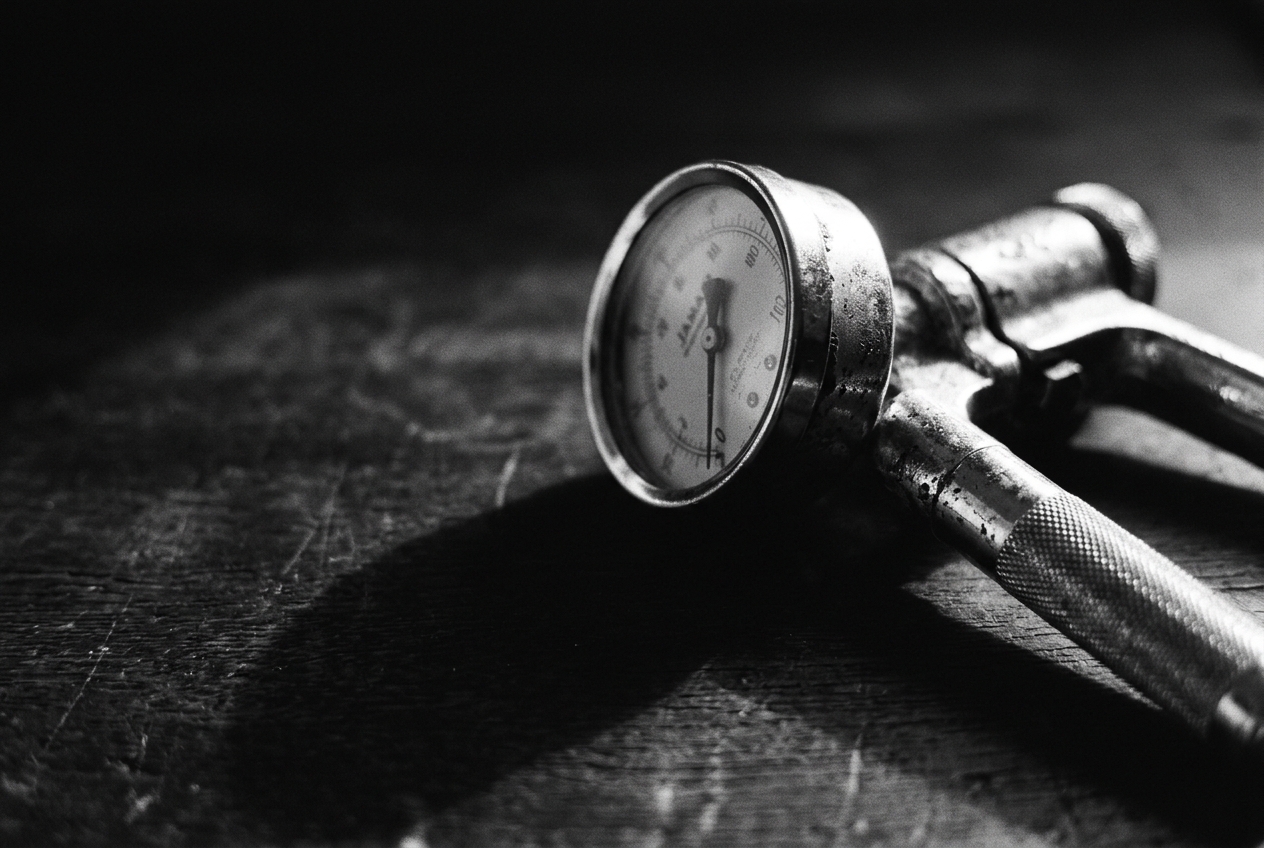
The device is a hand dynamometer. The measurement is grip strength. The relationship between grip strength and longevity is one of the most replicated findings in aging research: stronger grip, longer life, fewer years of disability.
This is not a gym metric. It is a clinical one.
Why grip strength predicts so much
Grip strength matters not because your hands are more important than the rest of your body. It matters because it’s a proxy for total-body neuromuscular function, the integrated output of your nervous system, skeletal muscle, tendons, and capacity to generate force on demand.
When grip strength declines, it rarely means your hands got weak. It means the whole system is losing capacity: muscle mass, neural drive, hormonal support, the connective tissue that holds it all together. Grip is the canary in the coal mine.
Cardiovascular mortality. Lower grip strength independently predicts death from heart disease, even after adjusting for age, sex, body size, and physical activity level. The Prospective Urban Rural Epidemiology (PURE) study, covering 140,000 adults across 17 countries, found that each 5 kg decrease in grip strength was associated with a 17% increase in cardiovascular mortality.
All-cause mortality. The same PURE data showed a 16% increase in all-cause mortality per 5 kg decrease. The association held across high-income, middle-income, and low-income countries. In that cohort, grip strength predicted mortality more reliably than systolic blood pressure.
Cognitive decline. Multiple longitudinal studies have linked low grip strength to faster cognitive decline and higher dementia risk. The mechanism isn’t fully established, but one leading hypothesis involves shared pathways: neurodegeneration affecting motor neurons also affects cognitive function. Grip decline may be an early signal of a broader process.
Disability and independence. Grip strength predicts your ability to perform activities of daily living: dressing, bathing, cooking, carrying groceries. Below a certain threshold, the practical tasks of independent life become difficult or impossible. This matters at 45 when you are planning for 75.
Fall risk. Grip correlates with lower-body strength and power, which directly predict fall risk. Falls are the leading cause of injury-related death in adults over 65.
One measurement. Five disease domains. That’s why Protocol measures it quarterly.
The test: how grip strength is measured
Protocol uses the Jamar hydraulic dynamometer, the most validated device in the published literature. The protocol follows Sousa-Santos standardization:
- Position: Seated, elbow bent at 90 degrees, forearm resting on the arm of the chair (or unsupported in a neutral position), wrist in neutral.
- Handle position: Position 2 on the Jamar (this is standardized across research; different handle positions produce different readings).
- Instruction: “Squeeze as hard as you can. Give it everything.”
- Trials: Three attempts on the dominant hand. Best of three is the recorded value.
- Rest: 30 seconds between attempts.
Total time: about 90 seconds. The dynamometer itself runs $200-300 and lasts for years. Per-test cost is effectively zero.
The result is recorded in kilograms and compared against age- and sex-matched normative data. That comparison gives the number meaning: 35 kg in a 40-year-old man means something different than 35 kg in a 70-year-old woman.
The cutoffs: what the numbers mean
The European Working Group on Sarcopenia in Older People (EWGSOP2) published a validated screening algorithm that uses grip strength as the first gate. Their cutoffs:
- Men: below 27 kg = probable sarcopenia
- Women: below 16 kg = probable sarcopenia
Sarcopenia, the age-related loss of muscle mass and function, is one of the most underdiagnosed conditions in medicine. It predicts falls, fractures, hospitalization, loss of independence, and death. Grip strength is the fastest, cheapest way to screen for it.
If grip falls below these thresholds, the next step is a DEXA scan to measure actual muscle mass (specifically ASMI, or Appendicular Skeletal Muscle Mass Index). If both grip and muscle mass are low, sarcopenia is confirmed. If walking speed is also below 0.8 m/s (5 seconds or more to cover 4 meters at normal pace), sarcopenia is classified as severe.
Early-stage sarcopenia is reversible with resistance training and adequate protein. Severe sarcopenia is much harder to reverse. Catching it at the grip-strength screen, before both mass and function are gone, is the whole point.
Under 50: a different standard
The EWGSOP2 cutoffs were developed for older adults. If you are 38 and your grip measures 28 kg, you are technically above the sarcopenia threshold, but that does not mean your grip strength is adequate.
For adults under 50, Protocol uses age- and sex-matched population medians rather than the EWGSOP2 cutoffs. The benchmark:
Grip strength below the population median for your age and sex = a flag.
Not a diagnosis. A signal. It means you are in the bottom half of people your age, and the trajectory from there, without intervention, leads toward the sarcopenia thresholds decades earlier than necessary.
A 42-year-old man with a grip of 38 kg clears the EWGSOP2 cutoff of 27 but sits well below the median for his age group (typically 47-52 kg depending on the reference population). That gap is lost neuromuscular capacity that was avoidable.
The free test that outperforms expensive ones
Think about what grip strength predicts: cardiovascular disease, cognitive decline, disability, all-cause mortality. Now think about what it costs. No imaging. No blood draw. No lab processing. No insurance pre-authorization. No copay.
A coronary calcium score costs $100-400, requires a CT scanner, and exposes you to ionizing radiation. It tells you about one disease domain (cardiovascular). Grip strength predicts cardiovascular mortality and four other domains for zero dollars.
A full-body MRI costs $1,500-2,500 and produces a single snapshot. Grip strength can be tracked quarterly for years, giving you a trajectory, and trajectory is more clinically useful than any single data point.
Advanced imaging has its place. But the simplest measurements are often the most informative per dollar, and grip strength may be the sharpest example of that in medicine.
What actually improves grip strength
Grip strength improves when total-body strength improves. Dedicated grip training (crushing grippers, wrist curls) has a role for specific populations, but for most adults, the prescription is simpler: resistance training.
Compound movements that load the hands, like deadlifts, rows, farmer’s carries, pull-ups, and kettlebell swings, build grip as a byproduct of training the larger muscle groups. Protocol’s Physical Capacity protocol (Protocol 4) prescribes loaded carries in every resistance training session because they train grip, core stability, and total-body force production at the same time.
Priority order:
- Resistance training 2-4 times per week with compound movements. This is the primary driver.
- Loaded carries (farmer’s walks, suitcase carries, rack carries). Grip-intensive, whole-body beneficial. Start with a weight you can carry for 40 meters without stopping. Progress from there.
- Dead hangs from a pull-up bar for time. Protocol screens this at baseline (30-second hold is the passing standard) and uses it as both a training tool and a progress marker.
- Adequate protein. You cannot build muscle without sufficient amino acids. Protocol 2 (Muscle & Body Composition) sets protein targets by age group, calibrated to the evidence: 1.6-2.0 g/kg body weight depending on age and activity level.
The training drives adaptation. The protein funds it. You need both.
How Protocol tracks it
Grip strength is measured quarterly as part of Protocol 4 (Physical Capacity). The data feeds into Protocol 2 (Muscle & Body Composition) because grip is the first gate in sarcopenia screening.
The quarterly cadence matters. A single grip measurement tells you where you are. Four measurements over 12 months tell you where you’re heading. Direction, the slope of the line, is more actionable than any single data point.
What the trajectory tells the coaching team:
Grip improving, lean mass stable or increasing: The program is working. Stay the course.
Grip stable, lean mass declining: Early warning. Preserved grip with falling muscle mass suggests the neuromuscular system is compensating, for now. This is the window to intervene before grip follows.
Grip declining, lean mass stable: This is the one that warrants a physician call. Disproportionate strength loss with preserved muscle points toward a neuromuscular cause: peripheral neuropathy, B12 deficiency, cervical radiculopathy, early neurodegenerative process. Protocol flags this for physician review.
Both declining: Sarcopenia is progressing. Escalate protein to the ceiling of the age-appropriate range, increase resistance training load through Protocol 4, and consider hormonal assessment via Protocol 7.
Ninety seconds to measure. The decision tree it feeds runs considerably deeper.
The connection to body composition
Grip strength and body composition are not the same measurement, but they tell a connected story.
Your DEXA scan tells you how much muscle you have. Grip strength tells you how well that muscle works. A person with adequate ASMI but low grip has muscle that is not performing, which may indicate poor neural drive, chronic detraining, or an underlying condition. A person with low ASMI but preserved grip is getting maximal output from limited reserves, which buys time but not indefinitely.
Protocol measures both and cross-references them in the sarcopenia screening algorithm, because a number without context is just data.
Where to go from here
If you have never had your grip strength measured, you don’t know where you stand on one of the strongest predictors of longevity in the published literature. You might be fine. You might be in the bottom quartile, losing ground every year without knowing it.
Measurement comes first. Then context, what does your number mean for someone your age and sex? Then a plan: resistance training, loaded carries, adequate protein, and quarterly re-measurement to track the slope.
Protocol’s Physical Capacity assessment handles all of this. Grip is measured at onboarding alongside VO2 max, vertical jump, and a movement quality screen. You get your age-sex percentile, a target (above median at minimum, well above it ideally), and a training program built to move it.
Ninety seconds. One squeeze. More signal than most tests your doctor orders annually.
Ready to find out where you stand? Protocol’s Foundation Assessment measures what your annual physical misses, ApoB, HOMA-IR, DEXA body composition, VO2 max, and builds a specific action plan from the data.