

 ← Back to Blog
 HOMA-IR: why insulin matters more than blood sugar

HOMA-IR: why insulin matters more than blood sugar
Your last annual physical probably included fasting glucose and A1c. It almost certainly did not include fasting insulin. That omission means your doctor tested the smoke but not the fire. By the time smoke is visible, the fire has been burning for years.
HOMA-IR combines your fasting insulin and fasting glucose into a single number that estimates how resistant your cells are to insulin. It can catch metabolic dysfunction years (often a decade) before A1c picks it up, costs about $25 to add to a blood draw, and is probably the most informative test most people have never heard of.
Here’s what the number means and what to do with it.
The formula: simple math, useful signal
HOMA-IR stands for Homeostatic Model Assessment of Insulin Resistance. The formula is:
(Fasting Insulin x Fasting Glucose) / 405
Fasting insulin is measured in mIU/L. Fasting glucose is measured in mg/dL. Both come from the same morning blood draw.
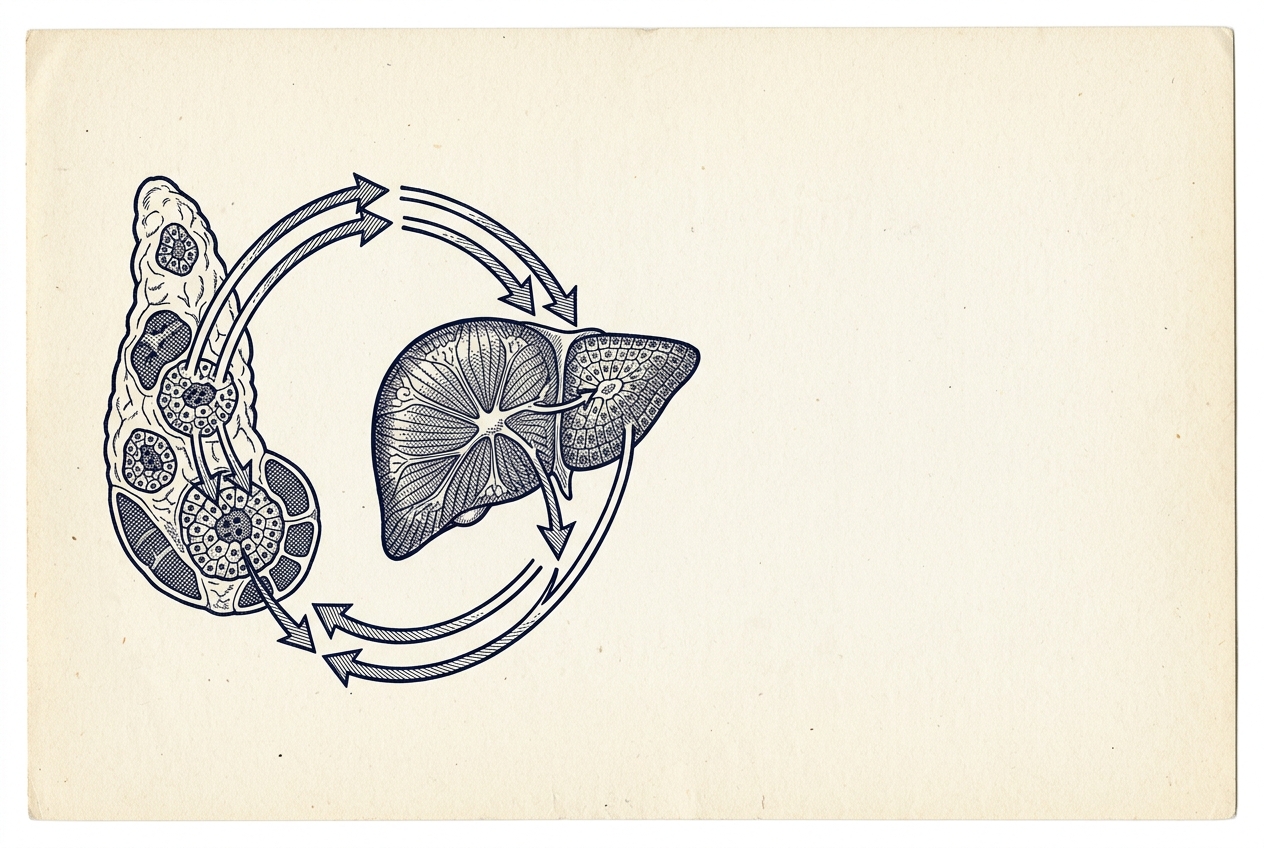
The result tells you how hard your body is working to keep blood sugar under control. A low number means your cells respond well to insulin: a small amount moves glucose efficiently. A high number means your cells are ignoring insulin’s signal, so your pancreas has to produce more and more of it just to keep glucose in range.
These are the tiers Protocol uses in our Metabolic Health protocol:
| HOMA-IR | Classification | What It Means |
|---|---|---|
| Below 1.5 | Healthy | Cells are insulin-sensitive. Pancreas is working at normal capacity. |
| 1.5 - 2.5 | Early dysregulation | Insulin is climbing, but glucose is still controlled. This is the intervention sweet spot. |
| Above 2.5 | Insulin resistant | Pancreas is working overtime. Metabolic damage is accumulating. |
That middle tier, 1.5 to 2.5, is where the real opportunity lives. A person with a HOMA-IR of 2.1 might have a fasting glucose of 94 mg/dL and an A1c of 5.3%. Completely normal on paper. No flags on any standard lab panel. But their fasting insulin is running around 9 mIU/L (nearly double what it takes in a truly insulin-sensitive person) to maintain those normal glucose numbers. Without HOMA-IR, this person has zero warning.
Why your annual physical tests the wrong thing
Standard metabolic screening gives you fasting glucose and A1c. Both are glucose measurements: they test the end product. What neither test measures is insulin, the hormone that controls glucose in the first place.
This is like checking the water level in your basement without checking whether your sump pump is working. The water level might be fine right now. But if the pump is running at 200% capacity to keep it fine, you have a problem that a water-level check will never catch, until the pump fails and the basement floods.
Insulin resistance follows the same pattern:
In the early phase, cells start ignoring insulin’s signal. The pancreas compensates by producing more. Fasting insulin climbs past 8 mIU/L. Glucose stays normal. A1c stays normal. HOMA-IR sits in the 1.5-2.5 range. Nothing on a standard panel flags it.
The dysfunction keeps accumulating. Fasting insulin reaches 12-20 mIU/L. HOMA-IR crosses 2.5. Post-meal blood sugar starts running higher, but fasting numbers and A1c are still technically “normal.”
Eventually the pancreas can’t keep up. Fasting glucose rises. A1c crosses 5.7%. Your doctor says “prediabetes.” But the underlying problem has been running for years, often a decade or more before that first flag appeared.
A1c is a late marker. Fasting insulin and HOMA-IR are early markers. Catching this at year 1 versus year 10 is the difference between a few targeted lifestyle changes and a chronic disease management plan.
For a deeper comparison of these two tests, including when each is most useful, read What Fasting Insulin Tells You That A1c Misses.
The fasting insulin ranges most doctors won’t give you
Most labs set their “normal” reference range for fasting insulin based on population averages. In a population where over 40% of adults have some degree of insulin resistance, the average is not the same as optimal.
A lab might report a fasting insulin of 14 mIU/L as “within normal limits.” Here’s a more useful frame:
| Fasting Insulin (mIU/L) | Assessment |
|---|---|
| Below 5 | Optimal: highly insulin-sensitive |
| 5 - 8 | Healthy: normal sensitivity |
| 8 - 12 | Early dysregulation: insulin rising, glucose still controlled |
| Above 12 | Elevated: likely insulin resistant, even with a “normal” A1c |
A fasting insulin of 10 with an A1c of 5.3 looks clean on paper. But the insulin level tells you the cells are already pushing back. This is when targeted interventions (walking after meals, protein-first sequencing, resistance training, sleep) actually move the number.
Wait until A1c catches up, and the interventions get harder and the stakes get higher.
TG:HDL ratio: a free proxy you already have
If you’ve had a standard lipid panel, one of the numbers on it is a rough proxy for insulin resistance: your TG:HDL ratio, triglycerides divided by HDL cholesterol.
| TG:HDL Ratio | Assessment |
|---|---|
| Below 1.0 | Optimal insulin sensitivity |
| 1.0 - 1.5 | Healthy |
| 1.5 - 2.0 | Possible early insulin resistance |
| Above 2.0 | Likely insulin resistant |
| Above 3.5 | Strongly associated with metabolic syndrome |
TG:HDL is noisier than HOMA-IR and can’t replace it, but the numbers are already sitting on your lipid panel. If your ratio is above 2.0 and you’ve never had fasting insulin tested, that’s reason enough to add it to your next draw.
In Protocol’s Metabolic Health protocol, we use TG:HDL as one of the stratification criteria alongside HOMA-IR, fasting insulin, and A1c. Members with a TG:HDL above 2.0 and a HOMA-IR between 1.5 and 2.5 are classified as Tier B (early dysregulation) regardless of whether their A1c looks normal.
The cancer connection: insulin as a growth factor
Diabetes is the obvious end point. But chronically elevated insulin carries a second risk that gets less attention.
Insulin is a growth factor. When it’s chronically elevated, cells prone to uncontrolled growth get a sustained proliferative signal. The associations between hyperinsulinemia and cancer are well-documented for breast cancer (both pre- and postmenopausal), colorectal cancer, pancreatic cancer, and endometrial cancer, where the link holds even after adjusting for obesity.
These are associations, not proof of causation. Obesity, inflammation, and insulin resistance are deeply tangled, and teasing out causality is hard. But the direction of the signal is consistent: lower fasting insulin appears to reduce risk across several cancer types, not just metabolic disease.
Ten years of elevated insulin before A1c finally flags anything is ten years of elevated growth signaling. That’s the part most people don’t think about when their doctor says everything looks fine.
What to do with your numbers
If you’ve never had fasting insulin tested:
Get it. Ask your doctor to add it to your next blood draw, or order it through a direct-to-consumer lab (Quest, Labcorp, and several online services offer it for $25-40 without a doctor’s order in most states). Get fasting insulin and fasting glucose from the same draw. Calculate your HOMA-IR. Check your TG:HDL ratio from your most recent lipid panel.
If your HOMA-IR is below 1.5:
You’re insulin-sensitive. Retest annually. Whatever you’re doing, keep doing it.
If your HOMA-IR is 1.5 - 2.5 (early dysregulation):
This is the window where changes actually move the number. What works:
- Post-meal walks. A 10-15 minute walk after your largest meal activates GLUT4 transport in skeletal muscle, moving glucose out of the bloodstream without additional insulin. Cheap, available everywhere, and the data is solid.
- Protein-first meal sequencing. Eat protein and vegetables before starches. Slows gastric emptying and blunts the post-meal glucose spike.
- Resistance training. 2-3 sessions per week. Muscle is the primary glucose disposal organ; more of it means lower insulin demand across the board.
- Sleep. 7+ hours. A week of 5-6 hours can cut insulin sensitivity by roughly 25%. Sleep is a metabolic intervention, full stop.
- 14-day CGM. A continuous glucose monitor shows you in real time which meals are spiking you. Protocol uses it to run paired experiments: same meal, one variable changed.
Done consistently, these can move HOMA-IR back into the healthy range within 60-90 days. Retest at 60 days to see whether you’re heading in the right direction.
If your HOMA-IR is above 2.5:
You have established insulin resistance. The same interventions apply, just with more intensity and closer tracking. At this level, ad hoc changes usually don’t move the number. Specific targets, defined retesting intervals, and clinical oversight make the difference.
If your A1c has already crossed 5.7, read Your A1c is 5.8: now what? for the immediate action plan.
How Protocol measures this
Fasting insulin and HOMA-IR aren’t add-ons in our system. They’re the first thing we calculate for every member entering the Metabolic Health protocol, before placing a CGM, before any dietary intervention. The HOMA-IR result assigns a tier:
Tier A (below 1.5) is metabolically healthy. The CGM here is for optimization: finding which meals spike you most, running experiments with one variable changed.
Tier B (1.5-2.5) is early dysregulation. The CGM is diagnostic. We build anchor meals, prescribe post-meal movement, and treat resistance training as a medical intervention.
Tier C (above 2.5) is established insulin resistance. The CGM is clinical, paired with a structured dietary plan, a registered dietitian, and MD oversight.
The tier determines everything downstream: how often we see you, how aggressive the intervention, when we escalate. A HOMA-IR of 1.2 and a HOMA-IR of 3.1 are different problems. They don’t get the same response.
That specificity starts with a $25 test most annual physicals skip.
Ready to find out where you stand? Protocol’s Foundation Assessment measures what your annual physical misses (ApoB, HOMA-IR, DEXA body composition, VO2 max) and builds a specific action plan from the data.
Related Content
Metabolic Health→