

 ← Back to Blog
 The HRT decision: lifestyle prerequisites most doctors skip

The HRT decision: lifestyle prerequisites most doctors skip
The HRT conversation usually goes one of two ways. Your doctor dismisses it (“let’s wait and see”) or writes a prescription on the first visit with minimal workup. Neither approach is wrong exactly, but both skip something: the foundation that determines whether hormone therapy actually works the way it should.
Protocol doesn’t gatekeep HRT. We’re not in the business of making women prove they’ve suffered enough before qualifying for treatment. What we do instead is make sure the foundation is solid so HRT works as well as possible, with fewer side effects and more predictable results.
That means addressing six specific lifestyle factors before, or alongside, starting hormones. Not as a hoop to jump through, but because unaddressed sleep deprivation, metabolic dysfunction, and chronic stress all interfere with how your body responds to hormone therapy. Used on an unstable foundation, HRT gives unpredictable results.
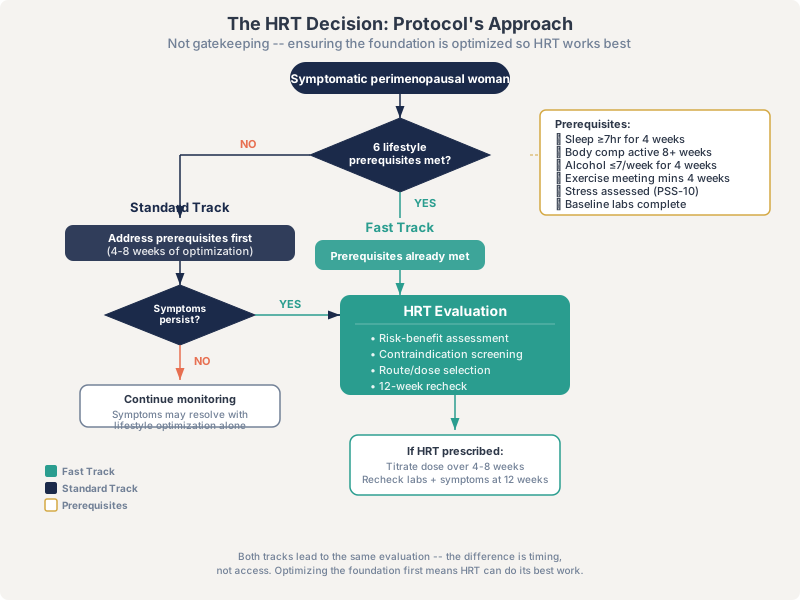
The 6 lifestyle prerequisites
Each one has a direct, documented effect on hormone metabolism, symptom severity, or treatment outcomes. Our Hormonal Health protocol assesses all six before making any HRT recommendation.
1. Sleep: 7+ hours for 4 consecutive weeks
Sleep deprivation alone can cause or worsen every symptom that sends women to their doctor asking about HRT: fatigue, brain fog, mood instability, weight gain, low libido. When sleep hasn’t been addressed, it’s genuinely hard to know which symptoms are hormonal and which are just the predictable result of chronic exhaustion.
The target: 7 or more hours per night for at least 4 consecutive weeks, confirmed by wearable data or through our sleep assessment. In some cases, fixing sleep resolves enough symptoms that HRT becomes optional. In others, symptoms persist despite solid sleep, which actually makes the case for HRT clearer, not weaker, and the therapy itself tends to work better when sleep is no longer the confounding variable.
2. Body composition: active participation for 8+ weeks
Body fat is an endocrine organ. Adipose tissue converts androgens to estrogen through aromatization, which means excess body fat alters the hormonal environment that HRT is trying to modify. It also increases inflammatory markers that affect how hormones are metabolized.
The specific targets depend on where you’re starting:
- BMI over 30: A minimum 5% weight reduction attempted before HRT initiation. Not achieved, but attempted. The effort itself often shifts metabolic markers in a useful direction.
- BMI 25 to 30: Active participation in our Body Composition protocol for at least 8 weeks, with documented engagement in the movement and nutrition protocols.
The goal isn’t reaching a specific weight before you “earn” HRT. It’s making sure body composition isn’t actively working against the therapy. Women who start HRT with active body composition work underway tend to report better outcomes than those who start hormones and change nothing else, likely because the metabolic environment is improving rather than static.
3. Alcohol: 7 or fewer drinks per week for 4 weeks
Alcohol affects estrogen metabolism directly. It increases estrogen levels through effects on aromatase and reduces the liver’s ability to clear estrogen metabolites. For women considering HRT, which adds exogenous estrogen, this interaction matters.
Alcohol also disrupts sleep architecture, raises cortisol, worsens hot flashes, and destabilizes mood. Many perimenopausal symptoms that feel hormonal are amplified by even moderate drinking. Some women cut back on alcohol and are surprised how much improves before they ever start hormones.
The target: 7 or fewer standard drinks per week, maintained for at least 4 weeks before HRT initiation.
4. Exercise: meeting minimum movement standards for 4 weeks
Exercise affects hormone levels, insulin sensitivity, bone density, mood, and sleep, every system that perimenopause disrupts. The specific standards come from our Body Composition protocol and include both resistance training and cardiovascular activity.
We’re not asking for marathon training. Consistent, minimum-effective movement, enough to confirm that exercise-responsive pathways are active before adding hormones. Exercise and HRT work together for bone density and cardiovascular protection, but only if the exercise is actually happening.
Four weeks of consistent movement also tells us something: whether exercise alone moves the needle on symptoms, and whether the habit is established enough to make HRT more effective over time.
5. Stress: documented assessment
Chronic stress elevates cortisol, which directly antagonizes estrogen, progesterone, and testosterone. A woman with significantly elevated cortisol and declining estrogen has a different clinical picture than a woman with normal cortisol and declining estrogen, even if their estradiol levels look identical on paper.
The assessment: either a PSS-10 (Perceived Stress Scale) score in the lower range (below 14, indicating low-to-moderate perceived stress), or cortisol pattern testing (salivary or urinary) to document the stress response objectively.
The point isn’t to eliminate stress. It’s to know what the stress burden actually looks like before layering on hormone therapy. Unaddressed cortisol dysregulation can blunt the response to HRT and create symptoms that mimic hormonal deficiency, which makes diagnosis and dosing much harder.
6. Medication review
Some medications affect hormone levels, hormone metabolism, or the symptoms being attributed to hormonal changes. SSRIs, beta-blockers, thyroid medications, corticosteroids, and several other drug classes can all interact with the perimenopausal picture.
The review isn’t about stopping other treatments. It’s about understanding the full pharmacological context before adding hormones. Sometimes adjusting an existing medication addresses symptoms more effectively than HRT. Sometimes a drug interaction explains why previous HRT attempts didn’t work.
Fast track vs. standard track
Not every woman needs months of lifestyle optimization before starting HRT. Protocol uses two pathways.
Fast track
If all 6 prerequisites are already met (sleep is solid, body composition is being addressed, alcohol is moderate, exercise is consistent, stress is assessed, medications are reviewed) AND two hormone panels drawn on appropriate cycle days (or at any time if postmenopausal) confirm suboptimal levels, the recommendation proceeds directly to HRT. No waiting period. The foundation is already in place.
Standard track
If one or more prerequisites aren’t met, the approach is: implement the relevant lifestyle changes, retest hormones at 6 to 8 weeks, and reassess. The 6-to-8-week window isn’t arbitrary. It’s the minimum time needed to see whether lifestyle changes shift the symptom picture and to establish the foundation that makes HRT work better.
Some women on the standard track find that addressing sleep, exercise, and alcohol resolves enough symptoms that they choose to continue without HRT. Others find that symptoms persist despite a solid foundation, which is honestly also a good outcome, because it makes the case for HRT unambiguous and the starting point much cleaner.
What we prescribe and why
Estrogen: transdermal first-line
Transdermal estradiol (patch or gel applied to the skin) is first-line. Oral estrogen passes through the liver first (first-pass metabolism), which increases clotting factors and raises the risk of venous thromboembolism. Transdermal estradiol bypasses the liver, avoids that clotting risk, and delivers more stable blood levels throughout the day.
Clinical evidence consistently supports this distinction. Observational data and pharmacokinetic studies show that transdermal delivery doesn’t raise clotting factor levels the way oral estrogen does. There’s no clinical advantage to the oral route that justifies the additional risk.
Progesterone: micronized oral progesterone for women with a uterus
Any woman with a uterus who takes estrogen must also take progesterone to protect the uterine lining from unopposed estrogen stimulation. This isn’t optional.
Protocol prescribes micronized oral progesterone (Prometrium) as first-line. Synthetic progestins aren’t used first-line; this is a firm clinical preference, not an arbitrary restriction. Micronized progesterone has a better safety profile, fewer side effects, and tends to support sleep (it’s mildly sedating, which most perimenopausal women welcome). The synthetic progestins used in older HRT regimens (medroxyprogesterone acetate being the best-known example) carry a different risk profile and are associated with more side effects.
Testosterone: low-dose transdermal when indicated
Testosterone isn’t part of every woman’s protocol. It’s indicated for documented low free testosterone with specific symptoms (low libido, fatigue, and loss of motivation) that persist despite adequate estrogen replacement. We cover this in detail in our testosterone in women post.
DUTCH testing before initiation
Before starting HRT, Protocol uses DUTCH Complete testing to assess estrogen metabolism pathways. This shows how your body processes estrogen, whether it favors protective metabolites or potentially harmful ones. While not yet a standard-of-care requirement in most clinical guidelines, DUTCH testing provides baseline data that informs dosing decisions and monitoring frequency, and lets us track how estrogen metabolism responds to therapy over time.
Contraindications: when HRT is not appropriate
HRT is not appropriate for everyone. Clear contraindications include:
- Active estrogen-receptor-positive breast cancer, because exogenous estrogen can fuel tumor growth
- Active venous thromboembolism or pulmonary embolism, because initiating estrogen therapy during an active clotting event is contraindicated regardless of route
- Active liver disease, because impaired liver function affects hormone metabolism unpredictably
- Unexplained vaginal bleeding, which must be evaluated and explained before starting estrogen
These are absolute contraindications. A history of breast cancer (not active, ER-negative, or remote) is a more nuanced conversation that requires oncology input. It’s not an automatic exclusion, but it’s not a decision made without that specialist input either.
Why this approach matters
The typical HRT experience: a woman suffers through months or years of symptoms, finally gets a prescription, starts hormones without any lifestyle assessment, and gets variable results. Some symptoms improve. Others don’t. Side effects appear. Doses get adjusted repeatedly. It feels like guesswork because it largely is.
When a woman starts HRT with solid sleep, active body composition work, moderate alcohol, consistent exercise, managed stress, and a clean medication profile, the hormones have a much better environment to work in. Dose adjustments are smaller. Side effects are fewer. Symptom resolution is more complete.
The prerequisite work isn’t a barrier to HRT. It’s the difference between spending six months chasing the right dose and starting somewhere that makes sense.
How this connects to the full protocol
The 6 prerequisites map directly to Protocol’s other protocols:
- Sleep connects to our Sleep protocol
- Body composition and exercise connect to our Body Composition protocol
- Metabolic markers affected by all six prerequisites are tracked in our Metabolic Health protocol
- Cardiovascular risk that accelerates during perimenopause is monitored through our Cardiovascular Health protocol
HRT is one tool in a system that addresses the full scope of what changes during perimenopause and menopause. The lifestyle prerequisites make sure the other tools are working before, and alongside, hormone therapy.
If you’ve been considering HRT and want an approach that builds the foundation first, Protocol’s Hormonal Health protocol is designed for exactly this.
Book a Discovery Call to discuss whether HRT is right for you and what the prerequisite assessment looks like.
Related Content
Hormonal Health→