

 ← Back to Blog
 The supplement audit: how to know what you actually need

The supplement audit: how to know what you actually need
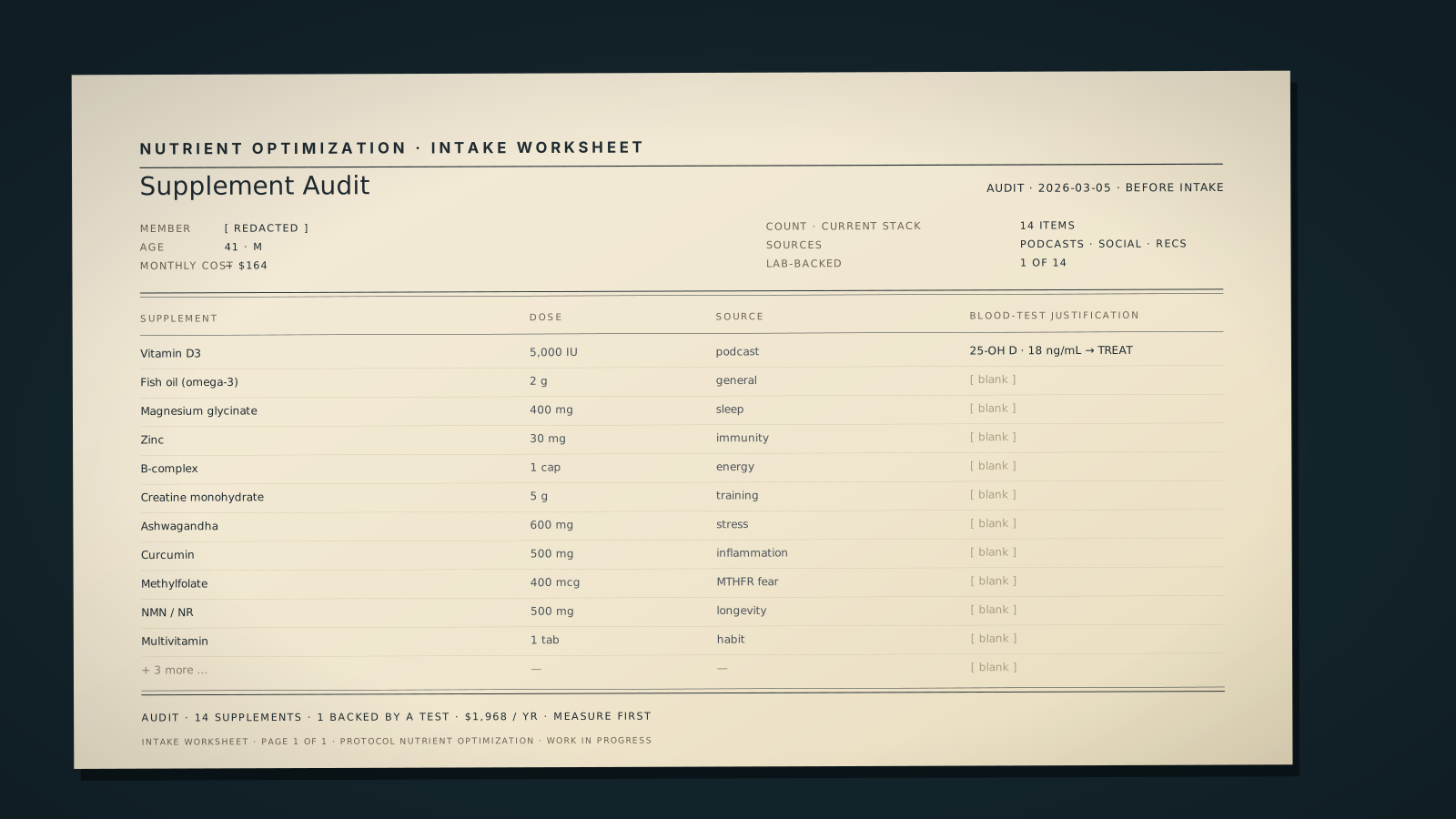
Open your medicine cabinet. Count the bottles. Vitamin D. Fish oil. Magnesium. Maybe a multivitamin. Probably something you heard about on a podcast six months ago.
Now ask yourself: which of these are you taking because a blood test showed you needed them?
For most people, the answer is none. The supplement industry pulls in $60 billion a year, and the bulk of that is money spent solving problems people don’t have while missing deficiencies they do. A real supplement audit starts with one question: what does your blood actually show?
The problem with the podcast supplement stack
You take vitamin D because Andrew Huberman mentioned it. Fish oil because it seems like a good idea. Magnesium for sleep, or maybe muscle cramps. Zinc for immunity. A B-complex for energy.
Each one sounds reasonable. Stack them together and you’ve got $100-200/month in pills, with no idea whether any of them are addressing a real deficiency, whether the doses are right, whether the forms are absorbed, or whether any interact with medications you take.
The most expensive supplement is the one that isn’t doing anything. You can’t know which ones those are without a blood test.
What a supplement audit looks like
A real audit has three parts: test, evaluate, verify.
Test: measure what matters
You don’t need to test every nutrient, just the ones that commonly show up deficient or suboptimal in health-conscious adults:
Vitamin D (25(OH)D) is the most common deficiency. Lab reference ranges say “normal” starts at 30 ng/mL, but research on bone health, immune function, and muscle performance clusters around 40-60 ng/mL. A level of 32 is technically “normal.” It’s probably not where you want to be.
Omega-3 Index measures what percentage of your red blood cell membranes are omega-3 fatty acids. Target: 8-12%. Most Americans land between 3-5%. This marker tells you whether your fish oil is actually doing anything, since many products have poor bioavailability.
RBC Magnesium is the intracellular measure, not serum magnesium. The distinction matters. Your body tightly regulates serum magnesium by pulling from bone and muscle stores, so you can be depleted at the cellular level and still show a “normal” serum result. Target: 4.2-6.0 mg/dL.
Ferritin reflects iron stores. The range that matters: 30-100 ng/mL for women, 30-200 for men. Too low causes fatigue, hair loss, and exercise intolerance. Too high causes oxidative damage. Both directions are common, and both get missed when nobody tests.
B12 lab ranges start at 200 pg/mL. Optimal is 300-900 pg/mL. A B12 of 220 is “normal” by lab standards but potentially insufficient, particularly for people over 50, vegans, or anyone on metformin or a proton pump inhibitor.
Homocysteine reflects methylation efficiency and B-vitamin status. Optimal: below 7 umol/L. Elevated homocysteine is an independent cardiovascular risk factor.
Protocol’s Nutrient Optimization protocol tests all of these as part of the universal panel, plus conditional tests, zinc, copper, selenium, iodine, MTHFR genotype, triggered by specific clinical findings.
Evaluate: keep, stop, or change
Once your blood work is back, a registered dietitian audits every supplement you’re currently taking.
Keep means there’s a confirmed deficiency, the form is appropriate, the dose is right, and the product is quality-verified (USP, NSF for Sport, or ConsumerLab certified). Money well spent.
Stop means no deficiency was found, or the evidence for supplementation without a deficiency is weak, or your diet already provides enough. Cut it.
Change means you’re on the right track with the wrong product. Maybe it’s magnesium oxide instead of glycinate. Vitamin D2 instead of D3. A fish oil so dilute you’d need 6 capsules to hit a therapeutic dose. Or the dose is simply wrong.
In our clinical experience, 20-40% of members who go through this process turn out to need no supplements at all. The rest typically end up with a shorter, more targeted list. The average member’s supplement spend goes down.
Verify: recheck to confirm it’s working
Almost nobody does this step. You start a supplement. Three months later, do you retest to see if the number actually moved?
Protocol retests every identified deficiency at 8-12 weeks. If your vitamin D was at 28 and you started 5,000 IU/day of D3, we check whether it reached 40-60. If your omega-3 index was 4% and you started 2g/day of EPA/DHA, we check whether it hit 8%.
When the number doesn’t move, the intervention changes: different form, different dose, different product. Supplements that don’t move the number get cut. There’s no point paying for something that isn’t working.
Common supplement mistakes
After auditing hundreds of supplement stacks, the same four mistakes keep coming up.
The generic multivitamin. It contains 20-30 nutrients at doses too low to correct a real deficiency and too scattered to target what you actually need. Deficient in vitamin D? A multivitamin with 400 IU won’t fix that, you probably need 2,000-5,000 IU. Not deficient in anything? The multivitamin is expensive urine. Either way, the money goes further elsewhere.
Magnesium form confusion. Magnesium oxide is cheap and widely available, but it’s poorly absorbed, studies consistently show it has significantly lower bioavailability than other forms. Glycinate, citrate, and threonate are meaningfully better. A lot of people taking magnesium are taking the wrong form and wondering why nothing feels different.
Fish oil underdosing. Most over-the-counter fish oil capsules contain 300-500mg of combined EPA and DHA. The evidence for cardiovascular and anti-inflammatory benefits starts at 2-4g/day of EPA+DHA, that’s 4-8 capsules of most products. Most people take one or two.
Supplementing without testing. Taking iron because you’re tired, without checking ferritin. Taking B12 for low energy, without a blood draw. Taking vitamin D “just in case” at a dose that might be too low or too high. A $30-50 blood test answers all three.
Food first, supplements second
A dietitian audit doesn’t start with which pills to take. It starts with what you eat.
Many nutrient deficiencies respond to dietary changes alone. Low omega-3? Two servings of fatty fish per week, salmon, sardines, mackerel, can help when levels are only mildly low, though moderate-to-severe deficits usually still need a supplement. Low magnesium? Pumpkin seeds, dark chocolate, spinach, black beans. Low B12 in a plant-based eater? Nutritional yeast and fortified foods can help, though supplementation is often still needed.
Nutrients from food come packaged with cofactors that improve absorption. Vitamin C in citrus improves iron absorption from plant sources. Fat-soluble vitamins, D, E, K, A, absorb better eaten with dietary fat. A capsule doesn’t do that.
Protocol’s Nutrient Optimization protocol starts with the dietary intervention, built around how you actually eat. Supplements come later, where food can’t close the gap or the deficiency is severe enough to need faster correction.
The audit in practice
Here’s what this looks like with a hypothetical member:
Before the audit: 7 supplements, $180/month. Vitamin D 2,000 IU, fish oil (1 capsule/day), magnesium oxide, zinc, B-complex, ashwagandha, CoQ10.
Blood work: Vitamin D at 38 ng/mL (below optimal 40-60). Omega-3 index at 4.2% (low despite fish oil, dose too low). RBC magnesium at 4.0 mg/dL (low, the oxide form isn’t helping). B12 at 450 pg/mL (fine). Homocysteine at 8 umol/L (slightly elevated). Ferritin at 85 ng/mL (good). Zinc at 78 mcg/dL (good).
After the audit:
- Vitamin D: change, increase to 5,000 IU D3 with K2. Recheck in 3 months.
- Fish oil: change, switch to high-potency product, 2g EPA+DHA/day. Recheck omega-3 index in 3 months.
- Magnesium: change, switch from oxide to glycinate, 400mg/day.
- B-complex: keep, homocysteine slightly elevated, B-vitamins support methylation.
- Zinc: stop, no deficiency.
- Ashwagandha: stop, insufficient evidence for Protocol’s standards. Discuss with health coach if sleep or stress is the real issue.
- CoQ10: stop, no statin use, no clinical indication.
Result: 4 supplements, $95/month. Everything on the list has a blood-test finding behind it, a verified product, and a recheck date.
Related Content
Nutrient Optimization→