

 ← Back to Blog
 VO2 Max: The Single Best Predictor of Longevity
VO2 Max: The Single Best Predictor of Longevity
At your annual physical, your doctor asks one question about fitness: “Do you exercise?”
You say yes. They check a box. Conversation over.
But “I exercise” covers everything from walking the dog to training for an Ironman. It says nothing about your cardiovascular fitness or your strength. Nothing about where you rank against people your age. These aren’t vanity metrics. They predict how long you’ll live.
VO2 max (maximum oxygen uptake, a measure of how efficiently your body uses oxygen during exertion) is the single strongest predictor of all-cause mortality in large cohort studies. More predictive than smoking status, blood pressure, or diabetes.
Most people have never had it measured.
What VO2 max actually is
VO2 max measures the maximum volume of oxygen your body can transport and use during intense exercise. It’s expressed as milliliters of oxygen per kilogram of body weight per minute (mL/kg/min).
The higher your VO2 max, the more efficiently your cardiovascular system delivers oxygen to working muscles. Oxygen delivery is the bottleneck for virtually every physical activity (climbing stairs, recovering from surgery, carrying luggage through an airport), all limited by the same system.
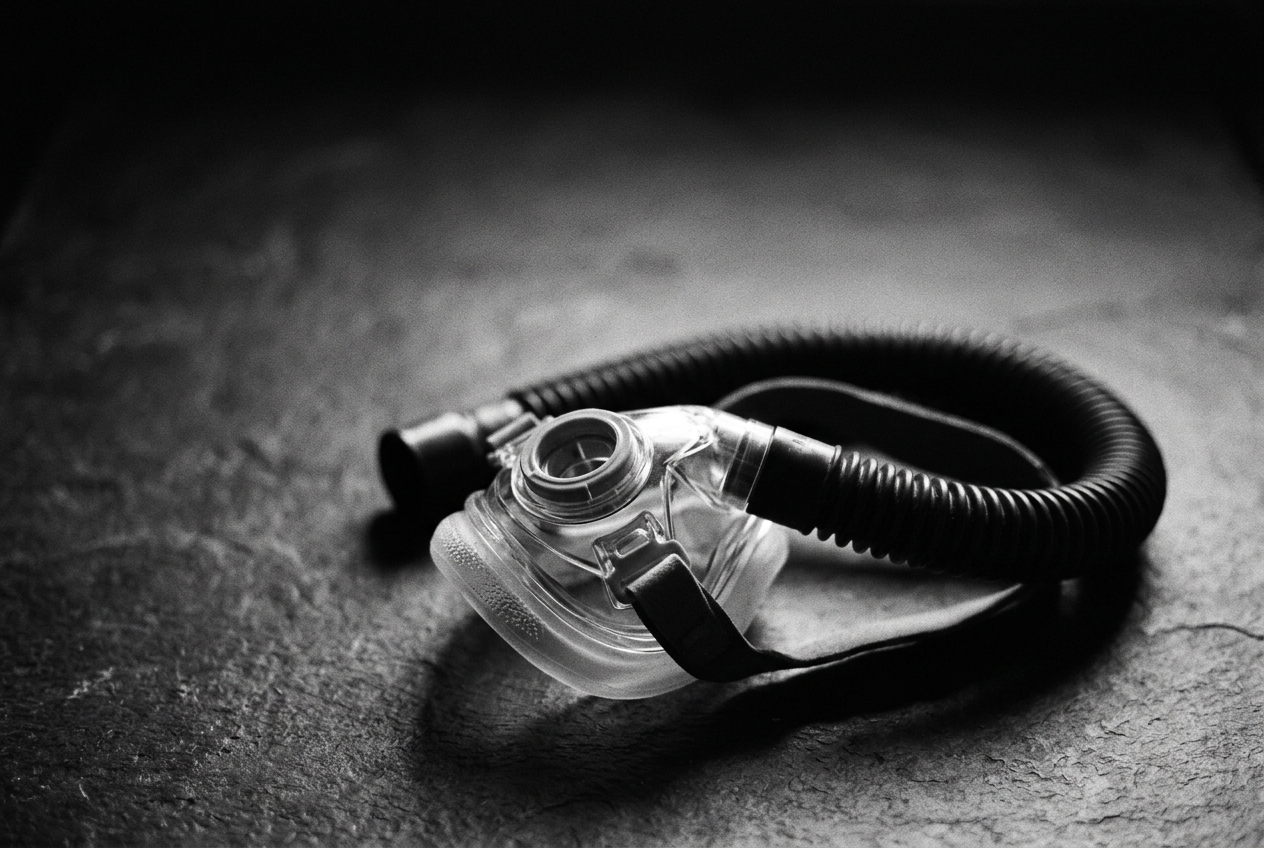
The test itself is straightforward. You exercise on a bike or treadmill while wearing a mask that measures the gases you breathe in and out. The workload increases incrementally until you hit your physiological ceiling, and a metabolic cart records the exact point at which your body maxes out its oxygen consumption. Fifteen minutes. One real number, not an estimate.
Why VO2 max predicts mortality better than almost anything else
A 2022 study in JAMA Network Open followed over 750,000 veterans and found that cardiorespiratory fitness (estimated from treadmill performance, not direct gas analysis) was the strongest predictor of mortality, ahead of smoking, diabetes, and hypertension.
People in the bottom 20% of VO2 max for their age have roughly 4-5x the mortality risk of those in the top 20%. Moving from “below average” to “above average” cuts that risk by about half. And the benefit doesn’t plateau. Even going from “fit” to “elite” continues to reduce risk.
A 2018 meta-analysis in the British Journal of Sports Medicine covering over 120,000 participants found the same dose-dependent relationship between fitness and mortality, across most age groups and both sexes studied. The association held after adjusting for other risk factors.
If you could only know one number about someone’s long-term health, this would be the one.
What most people get wrong about measuring it
Your Apple Watch estimates your VO2 max, and that word “estimates” carries more weight than most people realize.
Consumer wearables derive VO2 max from heart rate data during walks or runs, using algorithms trained on population averages. If you’re moderately active and run regularly, the estimate may land in the right range. But if your primary exercise is strength training or cycling, the number can be significantly off. If you’re deconditioned or on beta blockers, it’s often just wrong.
The gold standard is a metabolic cart test, where a mask measures the actual gases you exchange during exercise. The number you get is your real VO2 max: no algorithm, no estimate.
The problem is that metabolic cart testing has historically lived in exercise physiology labs and elite sports facilities. Your doctor’s office doesn’t have one, and neither does your gym. So the most predictive health metric we have goes unmeasured for most people.
Where you probably stand
VO2 max varies by age and sex. Here are approximate ranges for men age 40-49 based on ACSM normative data (women’s values are typically 10-20% lower at each tier):
| Percentile | VO2 Max (mL/kg/min) | What it means |
|---|---|---|
| Bottom 20% | Below 31 | Poor. Highest mortality risk. Daily activities may be effortful. |
| 20th-40th | 31-35 | Below average. Functional, but limited reserve for illness or aging. |
| 40th-60th | 35-40 | Average. Where most active adults land. |
| 60th-80th | 40-46 | Above average. Significantly lower mortality risk. |
| Top 20% | Above 46 | High. 4-5x lower mortality risk than bottom quintile. |
The clinically meaningful jump is from the bottom 20% to average. That transition alone cuts mortality risk roughly in half. But improvement at every level continues to pay off.
VO2 max declines approximately 10% per decade after age 30 if you don’t train it. A 50-year-old with a VO2 max of 35 today will be at roughly 28 by age 70 if nothing changes, below the threshold where daily independence becomes difficult.
Peter Attia popularized the concept of the “Centenarian Decathlon”: the physical tasks you want to be able to do at 80 or 90. Carrying groceries. Getting off the floor. Climbing stairs without stopping. Each has a VO2 max floor, and training it now is how you maintain physical independence later.
What else should be measured alongside VO2 max
VO2 max tells you about cardiovascular fitness. It doesn’t tell you everything about physical capacity.
Grip strength, measured with a calibrated Jamar dynamometer, independently predicts disability, hospitalization, and all-cause mortality. It’s one of the simplest health metrics available and has nothing to do with cardiovascular fitness. It’s tracking something else entirely about how your body is aging.
Power output declines faster than strength with age. A vertical jump or similar explosive test captures it. Low power output predicts falls and functional decline in older adults, which is why it matters even for people who feel strong.
Movement quality is harder to quantify but easy to notice when it’s gone. Can you hold a full squat? Reach overhead without compensation? Get up from the floor without using your hands? These aren’t fitness goals. They’re functional prerequisites, and most people lose them gradually without realizing it until something goes wrong.
Protocol’s Physical Capacity protocol measures all four: VO2 max via metabolic cart, grip strength, vertical jump, and a 5-position movement quality screen. Then it builds a coached training program around the results in 6-month cycles, with retesting to verify improvement.
The gap between knowing and training
You can get VO2 max testing at some sports medicine clinics and university exercise labs. Finding the test isn’t the hard part.
The hard part is what to do with the number. Knowing your VO2 max is 34 doesn’t tell you how to get it to 40. “Do more cardio” isn’t a plan. How much Zone 2 work? How many high-intensity intervals per week? How do you structure it alongside resistance training, and what do you change when progress stalls?
A number without a program is just a number. The thing that actually moves outcomes is a structured plan, someone coaching you through it, and a retest six months later to confirm the training is working, not just that you’ve been busy.
What you can actually do about it
VO2 max is trainable at any age. A deconditioned 55-year-old who starts structured aerobic training can improve VO2 max by 15-25% within 6-12 months, and observational data suggests the mortality benefit tracks with improvement.
But you can’t improve what you haven’t measured. And a watch doesn’t count.
VO2 max testing is part of Protocol’s Foundation Assessment baseline and the core metric of our Physical Capacity protocol. If you’ve never had yours measured by a metabolic cart, you’re making fitness decisions without the most important data point.
Book a Discovery Call
15 minutes. No commitment. We’ll tell you whether VO2 max testing should be your first priority, or whether another part of your health picture matters more right now.
Related Content
Physical Capacity→