

 ← Back to Blog
 Whole-body MRI for cancer screening: what the data actually says
Whole-body MRI for cancer screening: what the data actually says
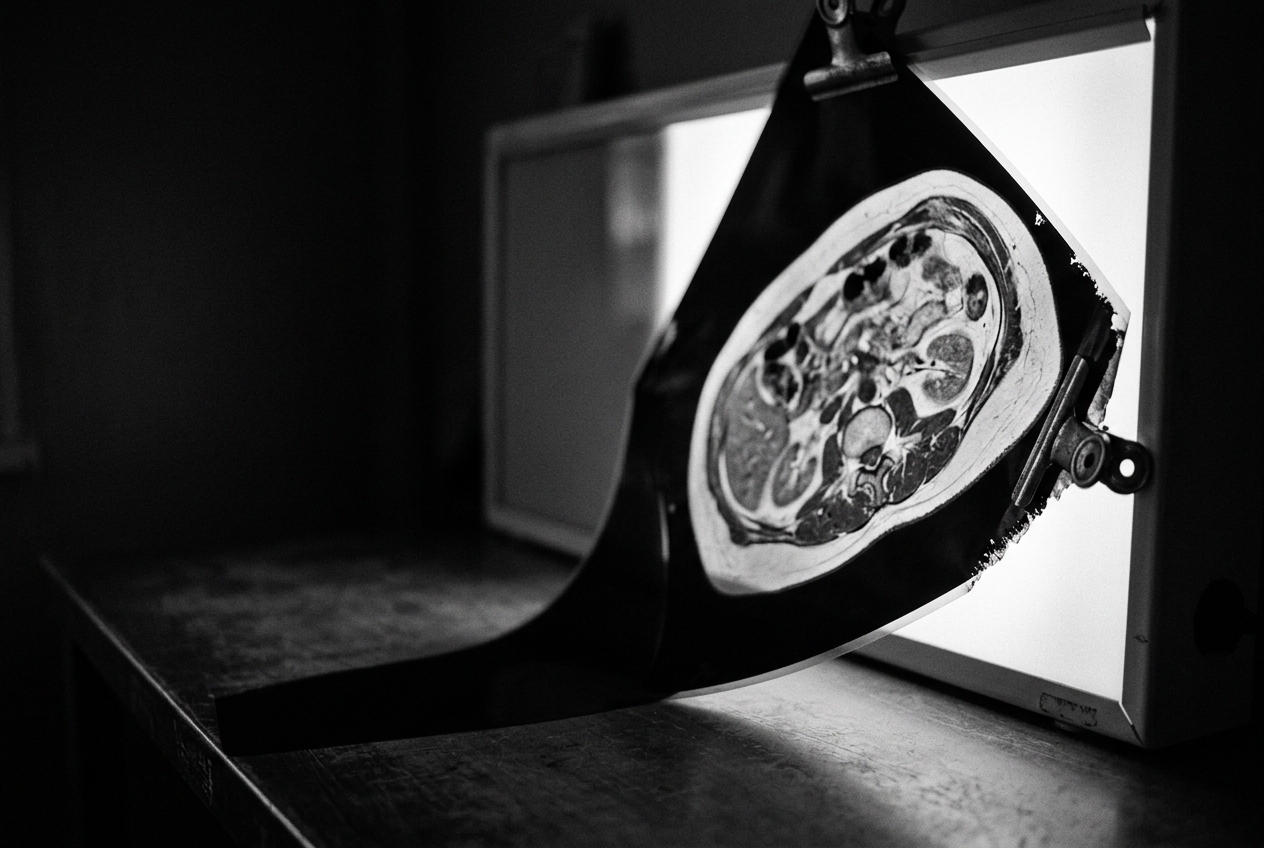
Full-body MRI has become the flagship offering of a new wave of screening companies. Prenuvo charges $2,500 or more for a single scan. Fountain Life includes it as the centerpiece of their APEX program, which typically costs $19,500+ per year. The pitch is scan everything, find problems early, save lives.
Whether the data supports that pitch is a different question. The published evidence on whole-body MRI for cancer screening in asymptomatic adults is more complicated than the marketing suggests.
What the systematic reviews show
Systematic reviews of whole-body MRI for cancer screening in asymptomatic populations keep returning to two numbers:
Cancer detection rate: 1-2%. In screened populations of healthy adults, whole-body MRI identifies cancer in 1-2% of scans. That number sounds meaningful, but a significant subset of those detected cancers have unknown clinical significance. Some may never have caused symptoms or required treatment during the patient’s lifetime.
False positive rate: 16%. Approximately 16% of whole-body MRI scans in asymptomatic adults produce findings that require follow-up but turn out not to be cancer. These incidental findings, renal cysts, thyroid nodules, liver lesions, adrenal incidentalomas, trigger additional imaging, biopsies, specialist referrals, and anxiety.
A 16% false positive rate means roughly 1 in 6 people who get scanned will face a cascade of follow-up investigations for something that isn’t cancer. Compare that to the 1-2% who have an actual cancer detected, and the ratio problem becomes clear: for every cancer found, approximately 8-16 people undergo unnecessary workup.
The ACR position
The American College of Radiology (ACR) issued a statement in 2023 directly addressing whole-body MRI screening. Its position, in substance: there is no documented evidence that total body screening is cost-efficient or effective in prolonging life.
The ACR sets standards for diagnostic imaging in the United States. When they say there’s no evidence, they’re making a specific claim: no published data demonstrates that whole-body MRI screening, applied to asymptomatic adults, extends life.
That doesn’t mean it never finds cancer. It does. The unanswered question is whether finding cancers through whole-body MRI leads to better outcomes than finding them through symptom-prompted evaluation or targeted, risk-based screening. No randomized trial has addressed that.
The incidentaloma problem
Whole-body MRI doesn’t just look at the organs you’re worried about. It images everything, kidneys, liver, spine, pelvis, thyroid, adrenals, and more. Many of these organs harbor benign findings that are common in the general population:
- Thyroid nodules are found in 20-67% of adults on high-resolution imaging. The vast majority are benign.
- Renal cysts are present in approximately 30% of adults over 50. Most are simple cysts with zero malignant potential.
- Liver hemangiomas are the most common benign liver tumor, found in up to 7% of the population.
- Adrenal incidentalomas turn up in 4-5% of CT and MRI studies.
Each of these findings, when flagged on a whole-body MRI report, typically generates a recommendation: “clinical correlation advised,” “follow-up imaging in 6 months,” “consider biopsy.” The patient, who walked in feeling healthy, now has a finding to worry about, a specialist to see, and a follow-up test to schedule.
This is the incidentaloma cascade. It’s well-documented. It’s expensive. Ganguli et al. (2019, JAMA Network Open) found that patients with incidental findings on imaging underwent more follow-up procedures and experienced higher anxiety than matched controls, with no improvement in health outcomes.
What actually has [a]-level evidence
Protocol grades screening recommendations using a three-tier evidence system. [A] means a randomized controlled trial has demonstrated that the screening test reduces mortality from the specific cancer. Here’s what that looks like in practice:
Colonoscopy for colorectal cancer [A]. Directly visualizes the colon, removes precancerous polyps, and has RCT evidence for mortality reduction. Recommended starting at 45 for Tier 1 (average risk), earlier for Tier 2 and Tier 3 individuals based on family history.
Low-dose CT for lung cancer [A]. The National Lung Screening Trial demonstrated a 20% reduction in lung cancer mortality in adults aged 55-74 with a 30+ pack-year smoking history. Current USPSTF guidelines extend eligibility to ages 50-80 with a 20+ pack-year history. Targeted, risk-based screening with proven results.
Mammography for breast cancer [A]. RCT evidence supports mammographic screening starting at 40, with supplemental MRI for women with elevated lifetime risk (Tyrer-Cuzick model >20%).
Each of these tests screens for a specific cancer, in a defined risk population, with a proven method. They were developed through decades of clinical trials. They target the cancers most likely to affect that specific population.
Whole-body MRI, by contrast, screens for everything at once in everyone, an approach that sounds thorough but is evidence grade [C] at best.
The cost comparison
A single Prenuvo whole-body MRI: $2,500+.
Fountain Life’s APEX program, which typically centers on whole-body MRI plus additional testing: $19,500+ per year.
Neither is covered by insurance. Both are marketed as proactive health investments.
Protocol’s Cancer Prevention protocol covers the same ground, all of it targeted and evidence-graded:
- Risk-tiered screening schedule based on three-generation family history
- Colonoscopy referral at the appropriate interval for your tier (typically covered by insurance as preventive care)
- Mammography at the appropriate interval (typically covered by insurance)
- Low-dose CT for eligible smokers (typically covered by insurance)
- Baseline PSA for risk stratification
- Annual dermatologic examination
- Genetic counseling referral when indicated
- Integration with metabolic (fasting insulin, HOMA-IR), inflammatory (hsCRP), and body composition (DEXA) data from other protocols
The [A]-level screening tests that form the backbone of this plan are largely covered by insurance because they have proven mortality benefit. The biomarkers that inform cancer risk are measured as part of protocols you’re already running for cardiovascular and metabolic health.
Dollar for dollar, an evidence-graded plan directs resources to where the proof of benefit is strongest. A $2,500 MRI with a 16% false positive rate and no mortality data competes poorly against that.
When whole-body MRI might make sense
This isn’t a blanket dismissal. There are specific clinical scenarios where whole-body MRI has a real role:
- Li-Fraumeni syndrome. Carriers of pathogenic TP53 variants have dramatically elevated risk across multiple cancer types, and the Toronto protocol for Li-Fraumeni surveillance includes annual whole-body MRI. This is a Tier 3, high-risk scenario with limited alternative screening options.
- Known hereditary cancer syndrome with multi-organ risk. Some hereditary syndromes elevate risk for cancers that lack dedicated screening tests. Whole-body MRI fills gaps in these specific populations.
- Follow-up of known abnormalities. If a previous scan identified a finding that needs monitoring, targeted or whole-body MRI may be part of the surveillance plan.
In these contexts, the baseline risk is high enough that the benefit of detection outweighs the cost of false positives. For the general population of healthy, asymptomatic adults, the math doesn’t work the same way.
The screening paradox
The appeal of whole-body MRI rests on a logic that feels obvious: more information is better, so if we can see everything, we should. Find a problem earlier and you get a better outcome.
The first two statements are debatable. The third is often true but not always. Lead-time bias, detecting cancer earlier without changing the outcome, and overdiagnosis, detecting cancers that would never have caused harm, are real phenomena that affect all screening programs. They hit untargeted screening hardest.
Targeted screening works because it applies a specific test to a specific population where the pre-test probability of disease is high enough to justify the test’s false positive rate. Colonoscopy works because the prevalence of colorectal adenomas in adults over 45 is high enough that polyps found during screening are overwhelmingly real and clinically relevant.
Whole-body MRI applies a sensitive test to an unselected population with low pre-test probability for any specific cancer. The outcome is lots of findings, most of them benign, with a small number of true cancers mixed in. Sorting signal from noise in that context is the core challenge.
Protocol’s position
We don’t tell members they’re wrong for wanting screening. The instinct to find problems before they find you is sound. Where you direct that instinct is what matters.
Our Cancer Prevention approach starts with what we know works. First, risk stratification: three-generation family history, genetic risk assessment, and modifiable risk factor evaluation to determine your tier for each cancer type. Then [A]-level screening, colonoscopy, mammography, LDCT for eligible smokers, the tests with RCT evidence for saving lives. Alongside that, we measure and track the modifiable risk factors behind 40% of preventable cancers: fasting insulin, hsCRP, body composition, physical activity, alcohol, tobacco. And for high-risk individuals, additional modalities including MRI are part of the plan, but targeted to specific organs based on specific risk, not whole-body imaging without a risk signal.
If, after building an evidence-graded plan, a member still wants to add whole-body MRI, we help them interpret the results in context. We explain the 16% false positive rate. We discuss what to do, and not do, with incidental findings. We make sure it supplements their plan rather than replacing it.
What we won’t do is substitute a $2,500 scan with no mortality data for the screening tests that have earned [A]-level evidence through decades of clinical trials. That’s not proactive. That’s just expensive.
Where this lands
Whole-body MRI is being marketed for a use case the evidence does not yet support. The ACR’s 2023 position is clear. The false positive rate is 16%. The cancer detection rate is 1-2%, with unknown clinical significance for some of those detections. No RCT has demonstrated that whole-body MRI screening extends life.
Risk-tiered screening, matching test intensity to your actual risk profile, cancer by cancer, maximizes the probability of catching dangerous disease early while minimizing the harm of false positives and unnecessary procedures. It’s less glamorous than a full-body scan. It’s also better supported by the evidence.
Want a cancer screening plan based on evidence, not marketing? Book a Discovery Call to learn how Protocol’s risk-tiered approach directs screening to where the data is strongest for your specific risk profile.