

 ← Back to Blog
 What to do after function health: turning 100 biomarkers into action
What to do after function health: turning 100 biomarkers into action
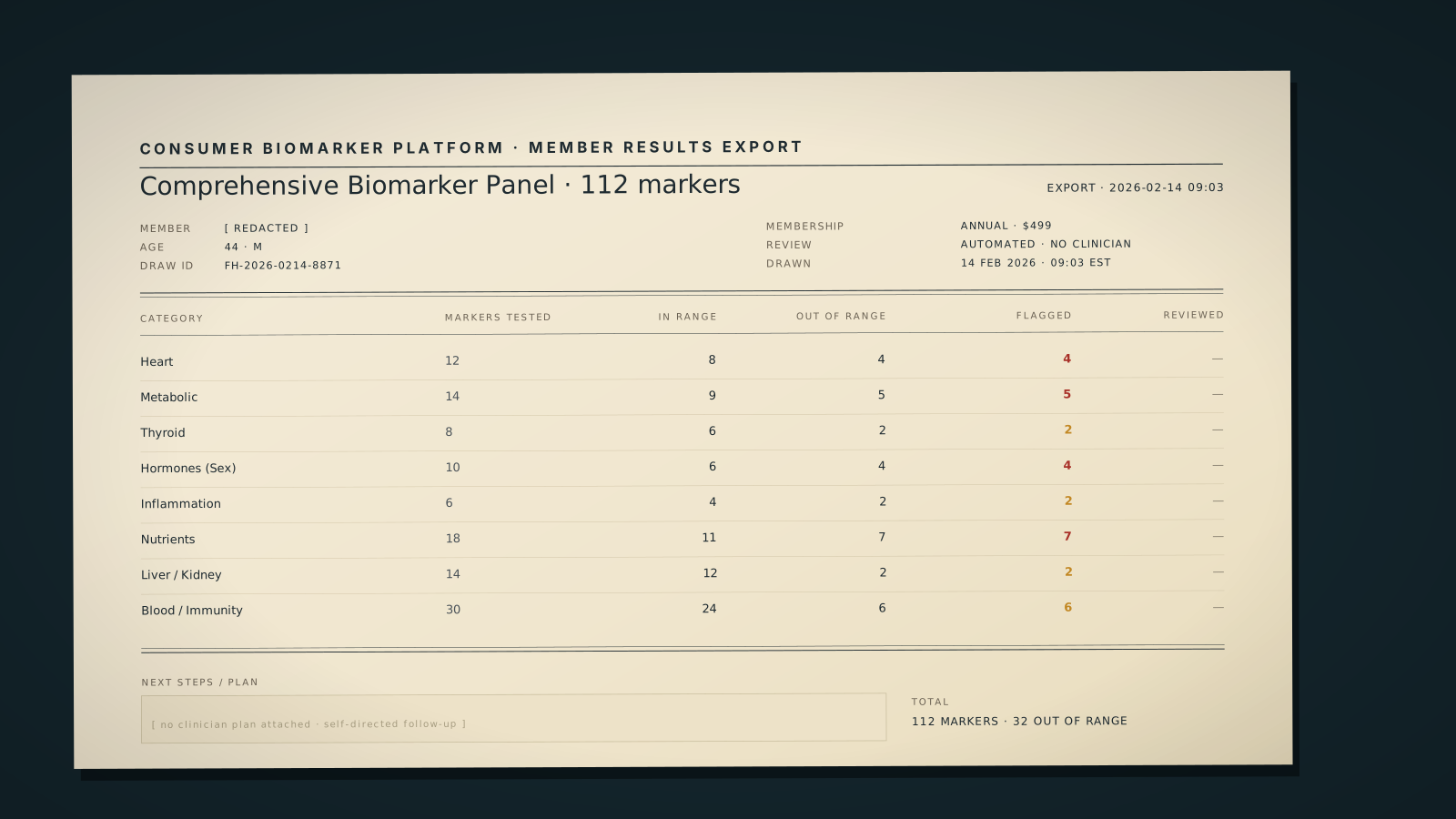
You signed up for Function Health, did the blood draw, got your results back, 100-plus biomarkers, color-coded, with reference ranges and percentile rankings. Some green. Some yellow. Maybe a few red.
Now you’re staring at the dashboard wondering: what do I actually do with this?
The gap between getting lab results and knowing what to act on is the most common frustration we hear from people who’ve done consumer testing. It’s not a knock on Function Health. It’s a structural problem across all of consumer health testing.
Function Health gave you more data about your body than most people ever see. The question is what happens next.
What function health does well
Function Health tests 100-plus biomarkers. That’s a lot of data at an accessible price.
A standard annual physical tests 20 to 30 markers. Function Health gives you hormones, inflammatory markers, metabolic markers, organ function, nutrient levels, and cardiac markers. The dashboard is clean. The color coding surfaces what’s flagged. The percentile rankings put your numbers in population context.
For anyone who’s been dismissed with “your labs look fine” after a narrow panel, Function Health solves that problem. You get the data.
But data isn’t the same thing as knowing what to do.
The interpretation gap
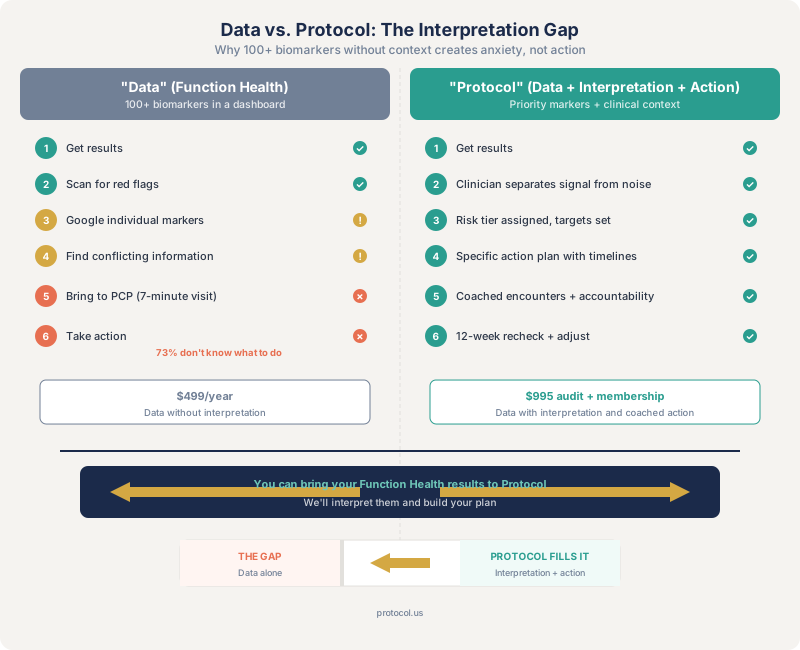
What typically happens after you get your Function Health results:
- You open the dashboard and scan for red flags.
- You see some yellow and red markers and feel a mix of concern and confusion.
- You Google individual markers, “what does high homocysteine mean” or “DHEA-S low what to do.”
- You find conflicting information, some alarming, some reassuring.
- You consider bringing the results to your PCP, who may or may not be familiar with all 100-plus markers, and who has 7 minutes to review them with you.
- You do… not much. Or you start a supplement regimen based on Google results. Or you wait for your next draw and hope the numbers improve.
This isn’t a failure of willpower. It’s a structural problem. Function Health shows you what your numbers are. It doesn’t tell you which ones actually matter for your specific risk profile, which ones are noise, or what to do about the ones that need to move. No clinical interpretation. No prioritization. No action plan.
Which of your 100 results actually drive decisions
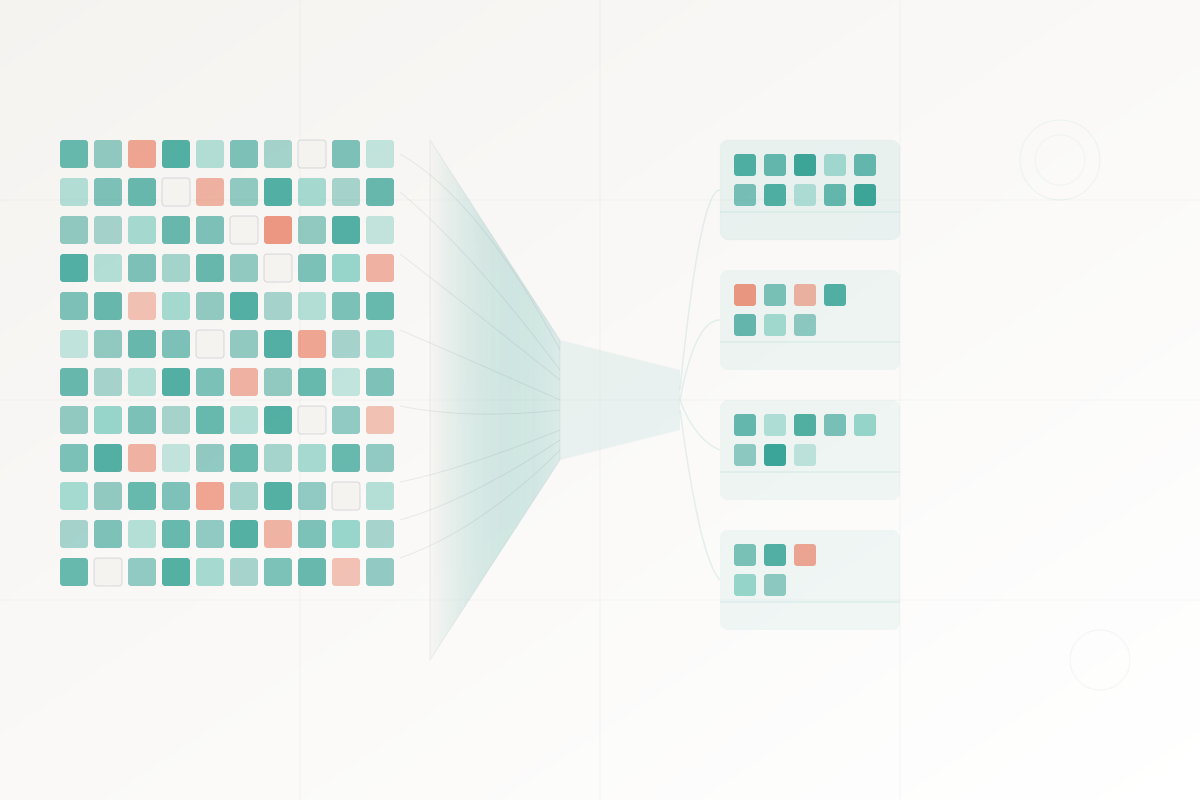
Some biomarkers directly change what you should do. Others are interesting but physiologically variable in ways that don’t warrant intervention, and a few more are essentially noise that gets flagged anyway.
Here are the markers from a typical Function Health panel that carry the most clinical weight:
The ones that matter most
ApoB: If Function Health tested it (some panels include it, some don’t), this is your single most important cardiovascular marker. ApoB directly counts atherogenic lipoprotein particles. It predicts cardiovascular events better than LDL-C, total cholesterol, or any ratio. If your ApoB is above your risk-appropriate target, that’s a finding that demands a specific response, not “eat less saturated fat” but a targeted protocol with a measurable target and a timeline.
Fasting insulin: Many people fixate on fasting glucose or A1c. Both are lagging indicators. By the time glucose rises, insulin resistance has been building for years. Most clinical guidelines lack a universal fasting insulin cutoff, but values trending above 10 uIU/mL, particularly combined with rising glucose, suggest your pancreas is working harder than it should to maintain normal glucose. HOMA-IR (calculated from fasting insulin and fasting glucose) gives you the clearest picture of insulin resistance.
hsCRP: High-sensitivity C-reactive protein measures systemic inflammation. A single elevated reading might be transient. Persistent elevation alongside metabolic or cardiovascular risk factors is a different matter. hsCRP alone means little. Alongside your metabolic profile, body composition, and cardiovascular markers, it tells a very different story.
Lp(a): Lipoprotein(a) is genetically determined and doesn’t change with diet or exercise. About 20% of the population has elevated Lp(a), and most don’t know it. If Function Health tested it and it’s high, that single finding reshapes your entire cardiovascular risk management approach. If they didn’t test it, that’s a gap worth filling.
Metabolic markers as a cluster: Fasting glucose, A1c, fasting insulin, triglycerides, HDL, and waist circumference (if available) tell a story that no single marker captures. They need to be read together.
The ones that are probably noise
Markers with wide physiological variability. Some hormones and micronutrient levels fluctuate based on time of day, recent meals, hydration, sleep quality, and stress. A single-draw “low” reading of, say, testosterone at 3 PM after a bad night of sleep may not reflect your actual baseline. These need repeat testing and clinical context before you act.
Markers within range but flagged yellow. Function Health’s reference ranges are sometimes tighter than clinical reference ranges, which means more markers get flagged. A yellow-flagged vitamin B12 of 450 pg/mL is not a problem that needs solving. A clinician who practices proactive medicine can quickly sort the signal from the noise.
Markers where the intervention is unclear or unproven. Some results are interesting from a data perspective but don’t have well-established interventions. Knowing your value is different from knowing what to do about it.
The difference between data and a Protocol
Function Health gives you data. A protocol gives you:
Prioritization. Of your 100-plus results, which 5 to 8 actually warrant action? A clinician who practices proactive medicine can look at your full panel, identify the markers that drive clinical decisions, and tell you which ones to focus on and which ones to ignore.
Specific targets. Not “improve your cholesterol” but “get ApoB below 80 mg/dL.” Not “work on your metabolic health” but “reduce HOMA-IR below 1.5 within 8 weeks through these specific dietary changes, and retest at week 8 to assess response.”
Specific timelines. Targets without deadlines are wishes. A coached protocol includes retest dates, weeks not months, so you can see whether the intervention is working and adjust if it’s not.
Escalation pathways. What if lifestyle intervention alone doesn’t move the number? A protocol includes clear decision trees. If ApoB doesn’t respond to dietary changes within 8 weeks, the conversation shifts to pharmacological options, discussed with evidence and without ideology. If HOMA-IR stays elevated despite exercise and nutrition changes, there’s a defined next step.
Coached accountability. A clinician who knows your data, tracks your progress, and adjusts the plan when it’s not working. Not an annual review. Regular sessions with someone who’s actually watching the numbers move.
What Protocol adds to your function health data
If you already have Function Health results, many of those labs transfer directly. Protocol’s Foundation Assessment fills the gaps and builds the action plan:
Labs that Function Health may not include:
- ApoB, if not in your panel. The single most important cardiovascular biomarker to add.
- HOMA-IR, calculated from your existing fasting insulin and fasting glucose, interpreted in full clinical context.
- Additional markers based on your specific risk profile.
Assessments Function Health doesn’t offer:
- DEXA body composition scan for lean mass, fat mass, visceral fat, and bone density. Your weight and BMI (if Function Health reports them) tell you almost nothing compared to DEXA.
- VO2 max testing. Cardiorespiratory fitness is one of the strongest predictors of all-cause mortality. No blood test measures it.
- Wearable data integration. Continuous glucose monitoring, sleep data, and activity tracking provide context that a single blood draw cannot.
The action layer:
- Clinical interpretation of your combined Function Health and Protocol data.
- A prioritized list of actionable findings. Not all 100-plus markers. The ones that matter.
- Module recommendations with specific targets and timelines.
- Ongoing sessions for accountability and plan adjustment.
The Foundation Assessment costs $1,500. If you already have recent Function Health labs, much of the blood work is covered. The Assessment adds the tests, scans, and interpretation that turn your data into a plan.
A specific example
Say your Function Health results show:
- LDL-C: 138 mg/dL (flagged slightly high)
- Triglycerides: 110 mg/dL (normal)
- Fasting glucose: 95 mg/dL (normal)
- hsCRP: 2.1 mg/L (flagged moderate)
- Several vitamin levels flagged yellow
Without clinical interpretation, you might focus on the LDL-C (because it’s flagged) and the vitamins (because there are several yellows). You might start a statin conversation with your PCP and buy a handful of supplements.
With clinical interpretation, the picture looks different:
- ApoB is the priority, not LDL-C. Your LDL-C of 138 could correspond to a very different ApoB depending on your particle size distribution. Test ApoB. That number tells you whether cardiovascular intervention is actually needed.
- Fasting glucose of 95 isn’t “normal” enough to ignore. It’s in the upper range. What’s your fasting insulin? If it’s 14 uIU/mL, your HOMA-IR is 3.3, that’s insulin resistance, caught years before glucose would cross the diagnostic threshold.
- hsCRP of 2.1 in context. Combined with insulin resistance, this isn’t random inflammation, it’s metabolic inflammation. The intervention isn’t an anti-inflammatory supplement. It’s addressing the metabolic dysfunction that’s driving the inflammation.
- The vitamin yellows can wait. They’re likely physiological variation. Retest in 8 weeks before doing anything.
One hundred data points. Three priorities. Specific next steps for each.
You already did the hard part
Getting tested is more than most people do. You have the data. The next step is figuring out what it means and what to do about it.
If you’re sitting on Function Health results, a Foundation Assessment is built for this. Bring the data. We’ll work through which results are actionable, what’s missing, and what a specific protocol looks like for your numbers.
Have Function Health results you want interpreted? Book a Discovery Call, bring your dashboard and we’ll walk through which markers actually matter, what needs to be added, and what a real action plan looks like for your numbers.
Related Content
Foundation Assessment→