

 ← Back to Blog
 What an annual physical actually tests (and what it misses)

What an annual physical actually tests (and what it misses)
You leave the office with a handshake and a sentence: “Everything looks good.” Maybe you get a follow-up message in your patient portal: a column of numbers, most flagged “normal,” a few marked “slightly elevated” with no explanation of what that means.
That annual physical just tested about a dozen markers. It skipped the ones most likely to catch heart disease, insulin resistance, muscle loss, and cardiorespiratory decline while they’re still fixable. Here’s what the standard panel actually covers, and what it quietly leaves out.
What your annual physical actually tests
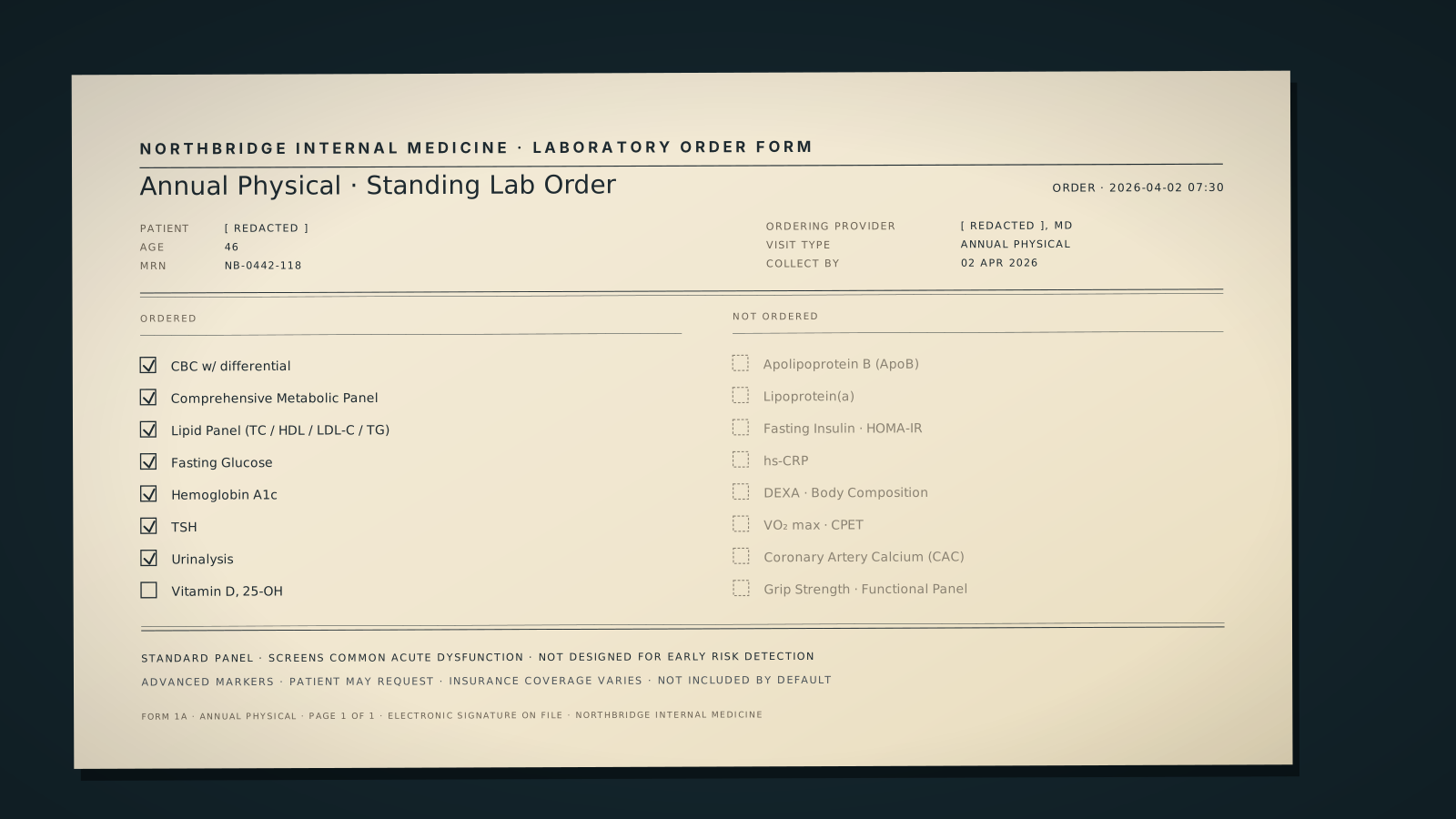
The exact panel varies by practice and insurer, but the core is consistent across most primary care offices:
Blood work:
- CBC (complete blood count). Red cells, white cells, platelets, hemoglobin. Good for detecting anemia, infection, and blood cancers. Not designed to catch cardiovascular risk, metabolic health, or body composition issues.
- BMP or CMP (basic/comprehensive metabolic panel). Sodium, potassium, glucose, kidney function (creatinine, BUN), liver enzymes. Useful for acute organ dysfunction. Not designed for early disease detection.
- Lipid panel. Total cholesterol, LDL-C, HDL-C, triglycerides. This is the one that’s supposed to assess your heart risk. We’ll come back to why LDL-C is the wrong number.
- Fasting glucose. A single snapshot of blood sugar after an overnight fast.
- TSH. Thyroid function. Sometimes included, sometimes not.
- A1c. Average blood sugar over 2-3 months. Increasingly ordered, but not universal.
Physical exam:
- Blood pressure
- Weight and BMI
- Heart and lung sounds
- Abdominal palpation
- Maybe a skin check
- Age-appropriate cancer screenings (mammogram referral, colonoscopy referral, PSA discussion)
Total face time with the physician: typically 7-12 minutes. That’s not an exaggeration. When your doctor has a panel of 2,500 patients, the math forces visits into single-digit minutes after documentation.
This panel was built to catch diseases that have already developed. It does that reasonably well, if you have diabetes, kidney failure, severe anemia, or a thyroid that’s stopped working, it will find it. That’s a low bar.
The six markers your annual physical skips
Here’s what’s missing, and why each omission matters more than most of what the standard panel actually tests.
1. ApoB (apolipoprotein b)
Your annual physical reports LDL-C, an estimate of the cholesterol mass carried by LDL particles. ApoB directly counts the atherogenic particles themselves. One ApoB molecule sits on each particle capable of entering your artery wall and driving plaque formation.
Across large prospective studies, a substantial portion of cardiovascular events occur in people whose LDL-C falls below standard treatment thresholds.1 Their particle count was high; their cholesterol mass estimate looked fine. ApoB catches that discordance. LDL-C misses it.
The test costs about $20 to add to a standard blood draw. Same tube. No additional preparation. And in head-to-head analyses, it predicts cardiovascular events more accurately than the LDL-C number your doctor has been tracking for decades.2
Protocol members start with ApoB as the primary cardiovascular metric. Our data shows members move from 27% optimal ApoB attainment at intake to 69% during the first year of membership. When you measure the right thing, you can actually move it.
2. Fasting insulin and HOMA-IR
Your annual physical checks fasting glucose and maybe A1c. Both are late-stage markers. By the time glucose or A1c flags a problem, you’ve likely been insulin resistant for 5-10 years. Longitudinal cohort data shows that fasting glucose typically stays near-normal until 2-3 years before a type 2 diabetes diagnosis, while insulin sensitivity has already been declining for far longer.
Fasting insulin measures how hard your pancreas is working to keep blood sugar in range. HOMA-IR, calculated from fasting insulin and fasting glucose together, estimates how resistant your cells are to insulin’s signal.
Insulin resistance starts with rising insulin, not rising glucose. Your pancreas compensates by producing more insulin, and for years, glucose stays normal. A1c stays normal. Your annual physical says “looks fine.” Fasting insulin is climbing the whole time. By the time glucose finally breaks through, the metabolic damage is well underway.
A fasting insulin of 12 mIU/L with a fasting glucose of 90 mg/dL (both entirely “normal”) would pass every standard screen, including an A1c of 5.4%. The HOMA-IR from that fasting insulin and glucose combination is about 2.7. That’s solidly insulin resistant. Catching this during the compensation phase is the difference between targeted lifestyle changes now and medication management years later. For the full breakdown: What Fasting Insulin Tells You That A1c Misses.
For the most sensitive early detection, an oral glucose tolerance test with serial insulin measurements (at 0, 30, 60, 90, and 120 minutes) catches hyperinsulinemia that a fasting draw can miss entirely. Someone with fasting insulin of 6 mIU/L but a two-hour post-challenge peak above 60 is still insulin resistant, and a standard panel won’t see it.3
3. Lp(a), lipoprotein(a)
Lp(a) is a genetically determined cardiovascular risk factor. Roughly 20% of adults worldwide have elevated levels, typically defined as above 50 mg/dL or 125 nmol/L.4 It doesn’t respond meaningfully to diet, exercise, or statins. It’s measured once to establish your lifetime baseline. The number stays relatively stable across adulthood, though hormonal shifts can move it modestly and a first wave of Lp(a)-lowering therapies (olpasiran, pelacarsen) is in late-stage trials.
If your Lp(a) is elevated, your entire cardiovascular risk strategy changes. Statin therapy may need to start earlier and at lower ApoB thresholds. Your physician needs this information to make the right call.
Most people have never had Lp(a) tested. Most annual physicals don’t include it. It’s a one-time blood test that costs around $30.
4. DEXA body composition scan
Your annual physical records your weight and calculates your BMI. BMI is a ratio of weight to height that can’t distinguish muscle from fat, can’t identify visceral fat distribution, and misclassifies a large share of the population.
DEXA (dual-energy X-ray absorptiometry) measures lean mass, fat mass, visceral adipose tissue, and bone density, all independent predictors of mortality that BMI obscures entirely.
Skeletal muscle mass declines roughly 3–8% per decade after age 30, with losses accelerating after 60. That decline drives falls, fractures, metabolic dysregulation, and loss of independence. Grip strength and lean mass in midlife are independent predictors of all-cause mortality, stronger than many standard lab markers.7 Without DEXA, you have no idea where you stand. You can lose 15 pounds of muscle, gain 15 pounds of fat, and weigh exactly the same. Your BMI won’t budge. Your annual physical will say “weight stable.”
5. VO2 max
Cardiorespiratory fitness, measured by VO2 max, is one of the strongest single predictors of all-cause mortality. In a 2018 analysis of over 122,000 patients, low cardiorespiratory fitness was associated with higher mortality than smoking, diabetes, or hypertension.8 Earlier meta-analysis work found that each 1-MET increase in fitness was associated with approximately a 13% reduction in cardiovascular mortality risk; moving from the bottom 25th percentile to above the 50th is associated with a large, durable reduction in all-cause risk.9
Your annual physical may include a treadmill stress test. That test checks for cardiac ischemia: whether your heart muscle is getting enough blood under exertion. It tells you nothing about your aerobic capacity, where you sit on the fitness curve, or how your cardiovascular system compares to age-matched peers.
VO2 max requires a metabolic cart, a device that measures oxygen consumption and CO2 production during progressive exercise. The test takes about 15 minutes and gives you more signal about longevity than almost anything else a clinic can measure.
6. hsCRP in cardiovascular context
Some annual physicals include CRP (C-reactive protein) as a general inflammation marker. Fewer include hsCRP (the high-sensitivity version) interpreted in the context of cardiovascular risk.
hsCRP below 1.0 mg/L is associated with lower cardiovascular event rates independent of cholesterol levels. Above 3.0 mg/L signals elevated vascular inflammation that warrants investigation and intervention.10 One caveat: recent infection, injury, or intense exercise can transiently spike hsCRP, so a single elevated reading should be retested two to four weeks later before being treated as a chronic signal. Combined with ApoB and Lp(a), it completes a cardiovascular risk picture that LDL-C alone cannot provide.
Why “your labs look fine” is the most dangerous sentence in medicine
When your doctor says “everything looks normal,” they mean the markers we tested haven’t crossed the thresholds we use to diagnose established disease.
That’s not the same as healthy. Those thresholds were designed to identify people who are already sick.
Standard reference ranges are built from population data. In U.S. adults, only about 12% meet the criteria for optimal metabolic health, meaning the other ~88% show at least one marker of cardiometabolic dysfunction.11 The mean ApoB is around 95 mg/dL (Protocol’s median is 79). Average VO2 max declines steadily with age because almost no one is measuring it or training against it.
“Normal” means you’re not detectably sick by the metrics we checked. It says nothing about whether the systems that drive heart disease, diabetes, and physical decline are actually working well. It just means we didn’t look.
This isn’t your doctor’s fault. A 2023 estimate found that a primary care physician with an average 2,500-patient panel would need roughly 27 hours per day to deliver all recommended preventive, chronic, and acute care.12 There is no time to order, interpret, and act on ApoB, fasting insulin, HOMA-IR, Lp(a), DEXA, and VO2 max for every patient, the fee-for-service economics make it structurally impossible. The system was designed for disease management, not early detection. For more on this: Why Your Doctor Has 2,500 Patients and What That Means for You.
The gap between screening and assessment
Two different questions, two different tools.
Screening asks: do you have a disease?
- CBC, BMP, lipid panel, fasting glucose, A1c
- Designed to catch established conditions
- Threshold-based: you’re either above or below the cutoff
- Frequency: annually, if that
Assessment asks: how well are your systems actually functioning?
- ApoB, fasting insulin, HOMA-IR, Lp(a), hsCRP, DEXA, VO2 max
- Designed to detect dysfunction before disease develops
- Gradient-based: where do you fall on the spectrum, and which direction are you trending?
- Frequency: retested in weeks to months, not years
The annual physical is screening. It catches late-stage problems. It misses the 5-15 year window where intervention is easiest and most effective.
If someone told you “let’s recheck in 6 months” after borderline results, you already know how this plays out. Six months becomes a year. A year becomes two. The borderline result that was a signal becomes a diagnosis.
What a foundation assessment adds
Protocol’s Foundation Assessment measures what your annual physical skips.
The Foundation Assessment includes:
- ApoB, Lp(a), hsCRP. The cardiovascular markers that matter.
- Fasting insulin and HOMA-IR. Metabolic dysfunction detection years before A1c.
- DEXA scan for lean mass, fat mass, visceral fat, and bone density.
- Clinical interpretation. Not a PDF in your portal. A clinician who walks through every result and explains what matters, what’s noise, and what to do about it.
- A specific action plan with measurable targets, timelines, and coached follow-through.
The annual physical tells you whether you’re sick right now. The Foundation Assessment tells you which direction you’re heading, and gives you a plan to change it.
None of this is a criticism of your annual physical. It does what it was built to do. The question is whether that’s enough for what you actually want, staying healthy for decades, not just confirming you’re not sick today.
What this adds up to
Your annual physical tests about a dozen markers optimized for diagnosing established disease. It skips ApoB (the best predictor of heart risk), fasting insulin (catches metabolic dysfunction 5-10 years early), Lp(a) (genetic risk you need to know once), DEXA (the only accurate measure of body composition), VO2 max (the strongest predictor of all-cause mortality), and hsCRP in cardiovascular context.
Every one of these tests exists, is widely available, and costs less than most copays. They’re just not on the standard panel because the standard panel wasn’t designed to keep you healthy, it was designed to diagnose you once you’re already sick.
If your last annual physical ended with “everything looks fine,” the honest translation is: we checked the basics, and you don’t have a diagnosable condition right now. That’s something. It’s not what most people think it means.
References and further reading
1. Sniderman AD, Thanassoulis G, Glavinovic T, et al. Apolipoprotein B Particles and Cardiovascular Disease: A Narrative Review. JAMA Cardiology. 2019;4(12):1287-1295. DOI:10.1001/jamacardio.2019.3780
2. Marston NA, Giugliano RP, Melloni GEM, et al. Association of Apolipoprotein B-Containing Lipoproteins and Risk of Myocardial Infarction in Individuals With and Without Atherosclerosis. JAMA Cardiology. 2022;7(3):250-256. DOI:10.1001/jamacardio.2021.5083
3. Crofts C, Schofield G, Zinn C, et al. Identifying hyperinsulinaemia in the absence of impaired glucose tolerance: An examination of the Kraft database. Diabetes Research and Clinical Practice. 2016;118:50-57. DOI:10.1016/j.diabres.2016.06.007
4. Kronenberg F, Mora S, Stroes ESG, et al. Lipoprotein(a) in atherosclerotic cardiovascular disease and aortic stenosis: a European Atherosclerosis Society consensus statement. European Heart Journal. 2022;43(39):3925-3946. DOI:10.1093/eurheartj/ehac361
6. Janssen I, Heymsfield SB, Wang ZM, Ross R. Skeletal muscle mass and distribution in 468 men and women aged 18-88 yr. Journal of Applied Physiology. 2000;89(1):81-88. DOI:10.1152/jappl.2000.89.1.81
7. Leong DP, Teo KK, Rangarajan S, et al. Prognostic value of grip strength: findings from the Prospective Urban Rural Epidemiology (PURE) study. The Lancet. 2015;386(9990):266-273. DOI:10.1016/S0140-6736(14)62000-6
8. Mandsager K, Harb S, Cremer P, Phelan D, Nissen SE, Jaber W. Association of Cardiorespiratory Fitness With Long-term Mortality Among Adults Undergoing Exercise Treadmill Testing. JAMA Network Open. 2018;1(6):e183605. DOI:10.1001/jamanetworkopen.2018.3605
9. Kodama S, Saito K, Tanaka S, et al. Cardiorespiratory fitness as a quantitative predictor of all-cause mortality and cardiovascular events in healthy men and women: a meta-analysis. JAMA. 2009;301(19):2024-2035. DOI:10.1001/jama.2009.681
10. Ridker PM. Clinical Application of C-Reactive Protein for Cardiovascular Disease Detection and Prevention. Circulation. 2003;107(3):363-369. DOI:10.1161/01.CIR.0000053730.47739.3C
11. Araújo J, Cai J, Stevens J. Prevalence of Optimal Metabolic Health in American Adults: National Health and Nutrition Examination Survey 2009-2016. Metabolic Syndrome and Related Disorders. 2019;17(1):46-52. DOI:10.1089/met.2018.0105
12. Porter J, Boyd C, Skandari MR, Laiteerapong N. Revisiting the Time Needed to Provide Adult Primary Care. Journal of General Internal Medicine. 2023;38(1):147-155. DOI:10.1007/s11606-022-07707-x
Further reading
- Peter Attia, MD. Outlive: The Science and Art of Longevity. Harmony Books, 2023. Book-length treatment of the Medicine 3.0 framework underlying many of the arguments here.
- Allan Sniderman, MD. Review papers and commentary on ApoB as the central cardiovascular biomarker, available through JAMA Cardiology and Circulation.
- Paul Ridker, MD. Primary hsCRP and inflammatory-risk literature (JUPITER, CANTOS), via the Brigham and Women’s Hospital Center for Cardiovascular Disease Prevention.
- Ralph DeFronzo, MD. The Banting Lecture on the “ominous octet” of type 2 diabetes pathogenesis (Diabetes, 2009) for the underlying physiology of early insulin resistance.
- Sean Harper, MD. Public lectures on Lp(a) genetics and emerging therapeutics at the American Heart Association.
Ready to find out where you stand? Protocol’s Foundation Assessment and membership measure what your annual physical misses (ApoB, HOMA-IR, DEXA body composition, VO2 max) and build a specific action plan from the data.