

 ← Back to Blog
 MDVIP vs. Protocol: Access vs. Optimization

MDVIP vs. Protocol: Access vs. Optimization
If you’re weighing MDVIP against Protocol, you’ve already decided that standard primary care isn’t working. You want more time with a doctor. You want to be more than a chart number in a 2,500-patient panel.
The question is what “more” actually looks like. MDVIP and Protocol solve different problems. MDVIP gives you better access to a primary care physician. Protocol gives you a structured optimization program built around specific biomarkers, coached protocols, and measurable outcomes. Both are improvements over the standard system. They’re improvements to different things.
What MDVIP Offers
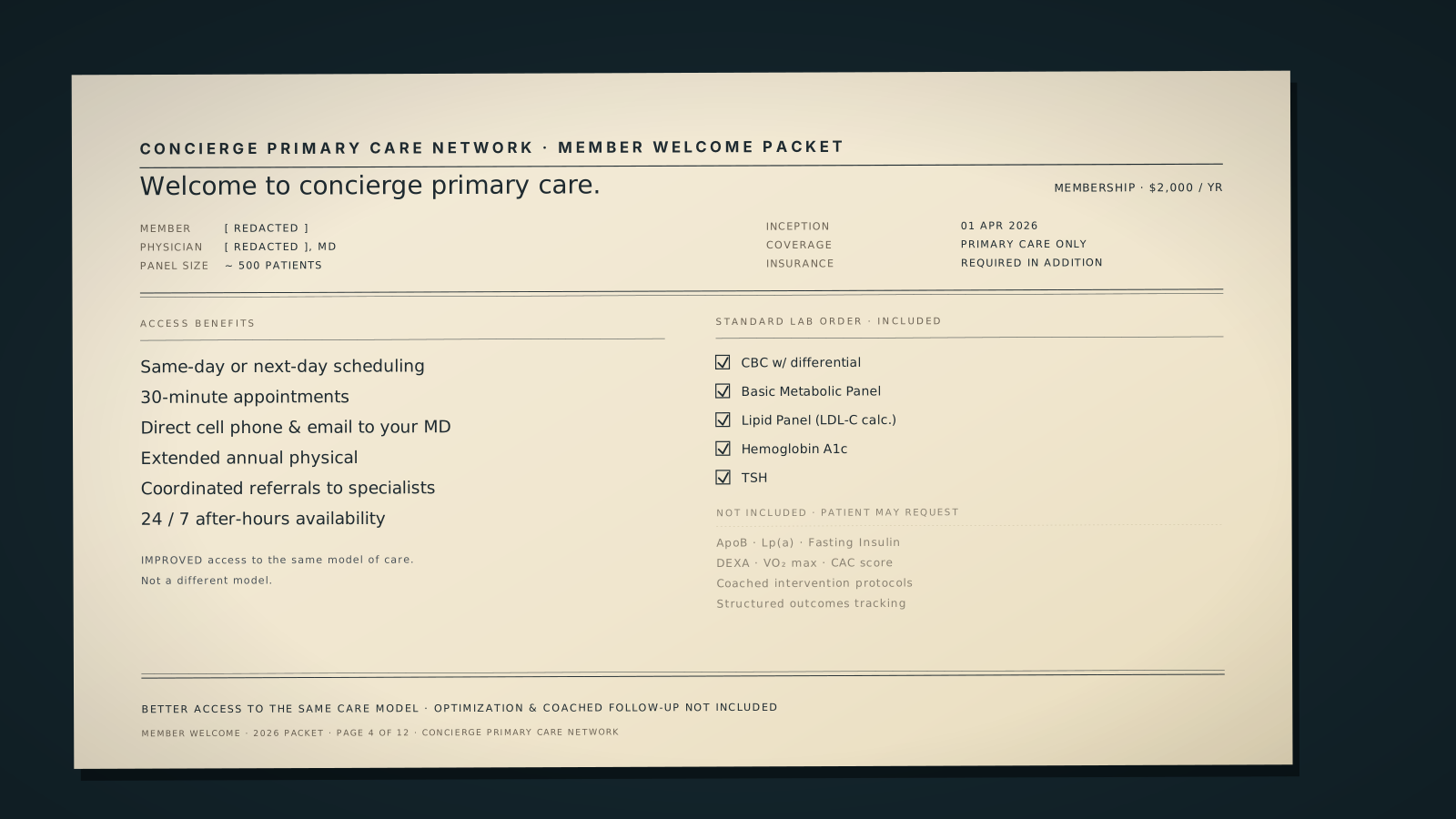
MDVIP is the largest concierge medicine network in the United States, with over 1,100 affiliated physicians across 44 states. The structure is simple: you pay an annual membership fee, typically $1,800 to $2,200 per year, on top of your regular insurance. In return, you get a physician with a smaller patient panel and more time per visit.
What you actually get:
- Smaller panels. MDVIP physicians typically maintain panels of 400 to 600 patients, compared to 2,000-2,500 in standard primary care. That’s a real reduction.
- Longer appointments. 30 minutes, instead of the 7-12 minutes you’d get in a standard practice.
- Same-day or next-day scheduling. Smaller panel size means less wait time for appointments.
- Extended annual exam, with additional screenings and longer physician time than standard primary care.
- After-hours access. Most MDVIP physicians provide a direct cell phone or email line for urgent questions.
If your primary frustration with healthcare is that you can’t get an appointment, can’t get your doctor on the phone, and feel rushed during visits, MDVIP fixes those things. For many people, that alone is worth the membership fee.
Where MDVIP Typically Falls Short
The limitations aren’t about what MDVIP does. They’re about what it doesn’t do. MDVIP improves the delivery of standard primary care. It does not typically change what’s being delivered.
Standard lab panels
MDVIP physicians typically order the same lab panels as standard primary care: CBC, CMP, lipid panel (LDL-C, not ApoB), fasting glucose, A1c, TSH. The annual exam is more thorough than a 7-minute visit, but the underlying diagnostics are typically the same.
The six markers most annual physicals skip (ApoB, fasting insulin/HOMA-IR, Lp(a), DEXA body composition, VO2 max, and hsCRP in cardiovascular context) are typically not part of the MDVIP panel either. You get more time to discuss the same standard results.
An MDVIP physician with 30 minutes can explain your LDL-C more thoroughly. But LDL-C is still the wrong primary metric for cardiovascular risk. Roughly 50% of heart attacks occur in people with “normal” LDL-C. ApoB, which directly counts atherogenic particles, catches risk that LDL-C misses. More time discussing a limited metric doesn’t close that gap.
The Longevity Diagnostics Gap
MDVIP practices typically do not include:
- DEXA body composition scanning. You’ll get a weight and BMI, neither of which can distinguish muscle from fat, identify visceral adipose tissue, or detect the progressive muscle loss that begins after muscle mass peaks in your late 20s.
- VO2 max testing. Cardiorespiratory fitness is one of the strongest single predictors of all-cause mortality. MDVIP practices typically don’t measure it.
- CGM (continuous glucose monitoring). A 14-day glucose trace reveals metabolic patterns that a single fasting glucose reading cannot. MDVIP practices typically don’t deploy CGMs for non-diabetic patients.
- Lp(a) testing. A one-time genetic cardiovascular risk factor that changes your entire risk management strategy if elevated. Typically not included in standard MDVIP panels.
These aren’t obscure or experimental tests. They’re available, validated, and directly relevant to the diseases most likely to affect MDVIP’s demographic, adults 40-65 investing in their health. They just don’t fit the concierge primary care model as MDVIP practices it.
What Happens Between Visits
MDVIP visits end the way most doctor visits end: with recommendations. Eat better. Exercise more. Lose some weight. Manage stress. All true. All vague.
The gap between a recommendation and actual behavior change is enormous. Research on lifestyle intervention has been clear for decades: information alone rarely changes behavior. Coached intervention, with specific targets, defined timelines, accountability check-ins, and iterative adjustments, does.
MDVIP typically does not include health coaching, registered dietitian access, structured exercise programming, or protocol-based intervention programs. The visit ends. What happens next is up to you.
Each Domain in Its Own Silo
Biology doesn’t work in silos. Your glucose response affects your sleep. Your sleep affects your hormones. Your hormones affect your body composition. Your body composition affects your cardiovascular risk.
Most primary care models, including MDVIP, handle each concern in isolation. High cholesterol gets a statin discussion. Weight gets a diet conversation. Sleep gets a referral. There’s no shared framework, no common data model, no single team that sees how each domain affects the others.
What Protocol Offers
Protocol isn’t concierge primary care with more tests. It’s a different model: structured health optimization delivered through specific, outcome-focused protocols, each built around a measurable headline metric.
50 patients per physician
MDVIP reduces panels from 2,500 to typically 400-600. Protocol operates at 50 patients per physician. At that ratio, your physician actually knows your ApoB trend, your training history, your sleep patterns, and your metabolic data. They don’t need to re-read your chart before each visit because they don’t have 400 other charts competing for attention.
ApoB-centric cardiovascular management
Where MDVIP typically tracks LDL-C, Protocol uses ApoB as the primary cardiovascular metric because it directly counts the particles that drive atherosclerosis. Protocol members start at 27% optimal ApoB attainment and reach 69% during membership. The median ApoB across Protocol’s membership is 79 mg/dL, compared to a US population mean of approximately 95 mg/dL (NHANES). That’s a coached outcome, not a screening result.
9 protocols with specific metrics
Each protocol is built around a headline metric with specific targets, sessions, and defined timelines:
| Protocol | Headline Metric | What It Measures |
|---|---|---|
| Cardiovascular Risk | ApoB at risk-tier target | Atherogenic particle count |
| Muscle & Body Composition | DEXA lean mass + grip strength | Body composition and functional strength |
| Metabolic Health | HOMA-IR + time above 140 mg/dL | Insulin sensitivity and glycemic control |
| Physical Capacity | VO2 max | Cardiorespiratory fitness |
| Sleep Health | Sleep midpoint consistency + ISI | Sleep regularity and quality |
| Nutrient Optimization | Lab-verified nutrient status | Actual micronutrient levels |
| Hormonal Health | Hormone panel optimization | Endocrine function |
| Emotional Resilience | PSS-10 + cortisol pattern | Stress physiology |
| Cancer Prevention | Risk-stratified screening | Age and risk-appropriate cancer detection |
Each protocol runs 4-10 weeks with a specific target and timeline. You don’t get a recommendation to “improve your cardiovascular health.” You get: “Your ApoB is 118. Target is below 80 by week 12. Here’s the protocol, here’s when we retest, and here’s the escalation pathway if lifestyle changes aren’t sufficient.”
Coached team model
Protocol’s care team includes health coaches, registered dietitians, and nurse practitioners with MD oversight. Each role has a specific function. Your health coach handles accountability and behavior change. Your dietitian builds nutrition plans tied to your lab data. Your NP manages clinical protocols and medication decisions under physician supervision.
This isn’t a doctor visit plus DIY. It’s a team that sees your data across domains and acts on the whole picture.
Side-by-Side Comparison
| MDVIP | Protocol | |
|---|---|---|
| Annual cost | Typically $1,800-$2,200 + insurance | $1,500 Foundation Assessment + $695/month membership |
| Patients per physician | Typically 400-600 | 50 |
| Primary CV metric | Typically LDL-C | ApoB |
| Fasting insulin / HOMA-IR | Typically not included | Included |
| Lp(a) | Typically not included | Included |
| DEXA body composition | Typically not included | Included |
| VO2 max | Typically not included | Included |
| CGM | Typically not included | Included |
| Health coaching | Typically not included | Included (dedicated coach) |
| Dietitian access | Typically not included | Included (registered dietitian) |
| Structured protocols | No | 9 protocols with specific targets and timelines |
| Retest cadence | Typically annual | Weeks to months, based on intervention |
First-year cost: MDVIP runs typically $1,800-$2,200 plus insurance copays and any additional testing. Protocol’s Foundation Assessment is $1,500; ongoing membership is $695/month, or $7,500/year prepaid. Protocol costs more. It also includes the diagnostics, coaching, and structured intervention that MDVIP typically does not.
Who MDVIP Is Right For
MDVIP solves a specific problem well. There are cases where it’s the better choice:
- Your main need is access. If your biggest frustration is that you can’t see your doctor, can’t reach them by phone, and feel rushed during visits, MDVIP fixes that. The move from 2,500-patient panels to 400-600 is meaningful.
- You want a better version of standard primary care. If you’re looking for a PCP who knows you, takes time with you, and coordinates your care, without needing a structured optimization program, MDVIP delivers that.
- You have existing specialists handling your longevity needs. If you already have a cardiologist tracking your ApoB, an endocrinologist managing metabolic health, and a trainer programming your exercise, you may just need a better PCP as the hub. MDVIP can fill that role.
- Cost matters most. At typically $1,800-$2,200/year, MDVIP costs less than Protocol’s membership. If better doctor access is what you need and a full optimization program isn’t in your budget, MDVIP is a solid option.
Who Protocol Is Right For
Protocol solves a different problem. It’s built for people who want measurable health improvement, not just better doctor visits:
- You want to know your actual numbers (ApoB, HOMA-IR, VO2 max, lean mass), not just the standard panel everyone gets.
- You’ve had the “everything looks fine” conversation one too many times and suspect the tests your doctor orders aren’t asking the right questions.
- You want a plan, not a recommendation. Specific targets. Defined timelines. Coached accountability. Iterative retesting. Not “eat better and exercise more.”
- You want one team that sees the whole picture. Not a PCP who handles labs, a trainer who handles exercise, a nutritionist who handles diet, and none of them talking to each other.
- You’re spending across multiple disconnected providers (trainer, nutritionist, doctor, supplements, apps) and want integration. Protocol’s structured programs and coaching team replace that fragmented stack.
The Core Difference
MDVIP takes the standard primary care model and makes it work better: fewer patients, more time, easier access. For many people, it’s enough.
Protocol starts from a different question. Not “how do we make doctor visits better?” but “what specific metrics predict disease and decline, how do we measure them, and how do we build coached interventions to move each one?”
MDVIP gives you more time with a physician, but that time is typically spent on the same standard diagnostics and the same reactive framework. Protocol gives you a physician with 50 patients instead of 400, but the value isn’t just the time. It’s what happens with that time. Nine protocols, each with a specific metric, a defined timeline, and a retest built in.
MDVIP improves the experience of healthcare. Protocol changes what healthcare actually does.
If you’re weighing both: do you need better access to standard care, or do you need a different kind of care entirely?
For comparisons with other approaches, see how Protocol stacks up against Fountain Life’s screening-first model, executive physicals, and testing-only platforms like Function Health.
Ready to find out where you stand? Protocol’s Foundation Assessment measures what your annual physical misses (ApoB, HOMA-IR, DEXA body composition, VO2 max) and builds a specific action plan from the data.